
Replacing an RV toilet looks like the simplest job in the trailer. Two bolts, one water line, one seal. The hard part isn't the work. It's finding out whether the new one will sit on the flange the old one came off.
This guide covers what determines fit, what manufacturers publish and what they don't, how plastic and ceramic bowls differ in practice, and five toilets worth considering once you know which one your floor will take.
Quick answer. Almost every current RV toilet mounts on two bolts through a three-inch floor flange, and on that basis most of them are interchangeable. Neither Thetford nor Dometic publishes the bolt spacing, so nobody can promise you a swap in advance. Measure the flange before you buy, and treat every claim of universal fit as a claim rather than a specification.
Table of Contents
What decides whether an RV toilet fits?
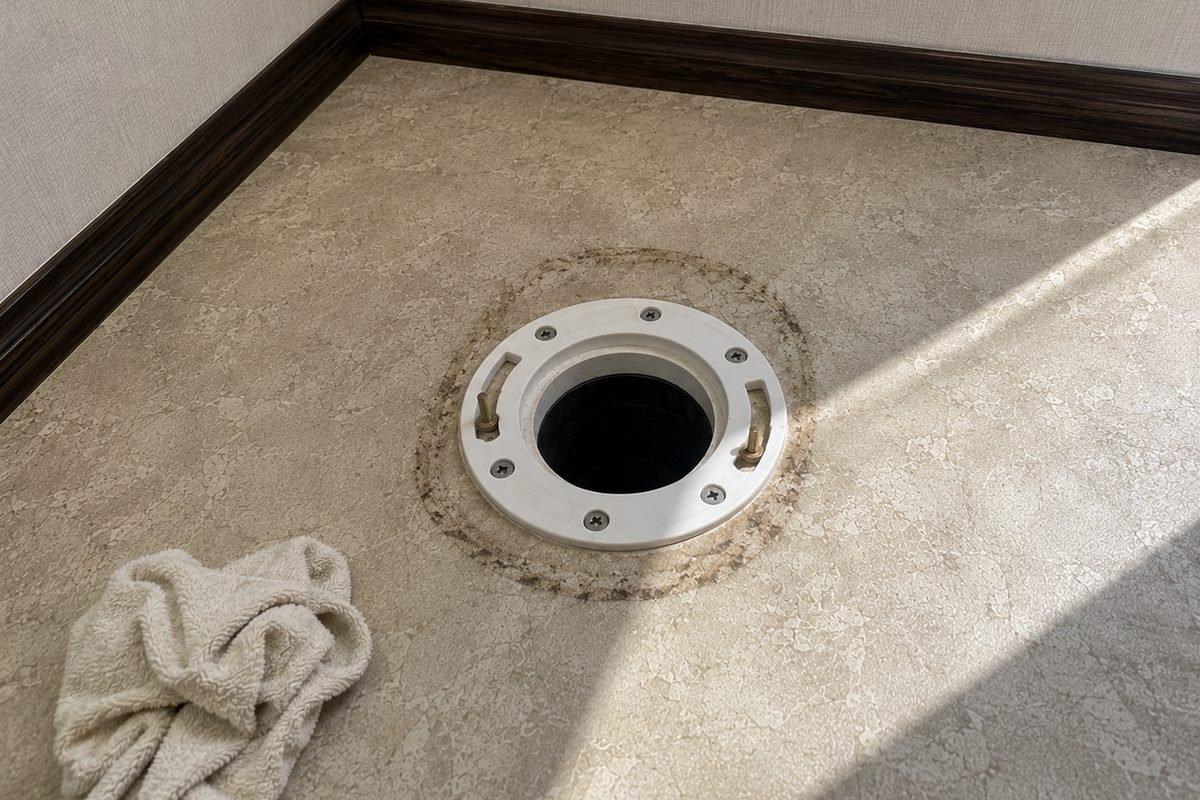
Four things, and only three of them are published.
The floor flange. Dometic specifies a flange with a three-inch inside diameter, between 0.25 and 0.44 inches thick, with the toilet held by two T-bolts that run perpendicular to the back wall. Torque is 30 to 40 inch pounds, which is snug, not as tight as it will go. Thetford's installation manual asks for the flange to sit 7/16 of an inch above the finished floor and supplies spacers to get it there.
The rough-in. This is the distance from the center of the flange to the back wall, and it decides whether the tank lid clears. Dometic publishes 10 inches for the 310 and 8.5 to 8.75 inches for the 300. Thetford publishes no rough-in figure for any model.
The water supply. Thetford asks for a 3/8 inch inside diameter line delivering at least 2.5 gallons per minute, connected with 1/2 inch NPT fittings. Dometic asks for 3 to 5 gallons per minute, with 2 as the minimum, at a static pressure between 30 and 100 PSI. A trailer that already runs a toilet meets this. A trailer being converted may not.
The bolt spacing, which nobody publishes. Both brands use two bolts. Neither states the distance between them anywhere in a manual, a spec sheet or a product page. Dometic's closest published figure is on the 400 series, which is advertised as fitting rough-ins of 7.625 inches and up. That is the flange to wall measurement, not the bolt centers, and it's the one number on either website that looks like the answer and isn't.
So the advice repeated on every forum, that RV toilets are all interchangeable, has nothing behind it from either manufacturer. It's usually true. It isn't documented, and if it fails you find out with the old toilet already off the floor.
What to do about it. Before ordering, lift the two bolt caps at the base of the existing toilet and measure center to center between the bolts, then measure from the center of the flange to the back wall. Those two numbers tell you whether the new toilet will fit.
Plastic or ceramic bowl?
The bowl material is the choice that changes how the toilet feels to use, and each has pros and cons rather than one being better.
Polypropylene. Thetford's Aqua-Magic VI weighs 10.75 pounds and the Residence 12.3 pounds. Dometic's 300 is the plastic model in its gravity range. Low weight matters in a trailer, because the toilet sits on a floor that flexes, and because you're lifting it into place over a flange while lying in a doorway.
Ceramic. Dometic's 310 and 320 use what it calls vitreous ceramic. Thetford's Style II and Style Plus use a ceramic bowl on a polypropylene base. Ceramic cleans more like the toilet at home and holds less staining over years, which is the main reason most people who have lived with both prefer it.
Neither manufacturer publishes a weight for a ceramic model, so the weight penalty can't be quoted. Dometic publishes no weight for any of its toilets at all.
How much water does an RV toilet use?
Thetford publishes one quart per flush, and sets it against the 1.6 gallons a household toilet uses. That figure is the same for the Aqua-Magic VI, the Residence, the Style II and the Style Plus. There's no published difference between them.
Dometic publishes no per-flush figure for any model. Its manuals give supply flow rate and nothing else. Retail listings quote pints and quarts for Dometic toilets, but those numbers don't appear in Dometic's own documents, so this article doesn't repeat them.
Which means the water-saving argument between one RV toilet and another isn't backed by published figures. The real variable is the person holding the pedal. A pedal held down for four seconds uses roughly four times what a pedal held for one uses, whichever brand is on the bowl.
Can you put a regular toilet in an RV?
Neither Thetford nor Dometic publishes a position on this. No manual addresses it, no FAQ answers it, and that silence is a reason for caution, not permission.
What can be said from what they do publish is that the two devices solve different problems. A household toilet keeps standing water in a bowl and a tank, which is weight that moves and water that sloshes down the road, and it flushes with 1.6 gallons into a tank that holds perhaps forty. An RV toilet holds a small amount of water above a sealed ball valve and empties straight down. Dometic's own marketing calls its toilets residential size rather than suggesting a residential fixture.
If what you want is the feel of the toilet at home, that is what the residential height and residential seat models are for, and they're the same price as the standard ones.
What about a composting toilet?
A composting toilet isn't a better version of the same thing. It removes the black tank from the equation, and in doing so it takes on a different set of chores.
Nature's Head publishes 60 to 80 uses before the solids bin needs emptying, which it describes as about a month for two people, and its FAQ gives the more useful test: when the handle gets hard to turn, it's full. Liquids go to a separate 2.2-gallon bottle, which is the part that's easy to overlook, because that bottle fills in a couple of days and someone has to carry it. The unit weighs 23 pounds empty, needs no water connection at all, and runs a fan on 12 volts drawing 0.07 amps, which the manufacturer says should run 24 hours a day.
The warranty is five years, which is more than double what either RV toilet brand offers. The price is roughly five times a good gravity toilet.
One caution on the published figures. Nature's Head states five feet of 1.5-inch vent hose in its specifications and a four-foot hose in its FAQ, where it also recommends 1.25-inch PVC for a permanent installation. The manufacturer disagrees with itself, so plan the vent run after the box is open rather than before.
Five RV toilets worth considering
Every specification below comes from the manufacturer's own manual or spec sheet. Where a figure is missing from this list, it's missing because the manufacturer doesn't publish it, not because it was left out.
Thetford Aqua-Magic VI, High Profile
The lightest published weight in the rangeAt 10.75 pounds this is the easiest of the five to hold over a flange with one hand while you line up two bolts, which is most of the job.
The bowl and base are polypropylene, the seat is slow close, and the flush is a single foot pedal. Thetford publishes one quart per flush and tests all its toilets to 350 pounds. The closet flange seal is part 33239, and Thetford asks for it to be replaced every four to six years, which is the only published seal interval either brand gives.
What You'll Love
- Light enough to set on the flange without help
- Published seal part number and replacement interval
- Slow close seat, so it doesn't slam at night
- Available in high and low profile from the same manual
Worth Considering
- Plastic bowl stains over years in a way ceramic doesn't
- Thetford publishes no seat height that can be checked
- No rough-in figure published, so measure before ordering
- Thetford doesn't publish its US warranty length anywhere
Dometic 300 Series Standard Height Toilet
The only plastic model with a published rough-inDometic publishes what Thetford doesn't: a labeled seat height of 18.25 inches and a rough-in of 8.5 to 8.75 inches from the flange center to the back wall. If your bathroom is tight behind the toilet, this is the one you can check on paper before you spend anything.
The bowl is polypropylene. The flush is a foot pedal with a single downward action that adds water and flushes together. The flush ball seal is nitrile butyl rubber and the floor seal is nitrile and foam, and the mounting hardware including the flange seal comes in the box. Warranty is two years for household use.
What You'll Love
- Seat height and rough-in both published and checkable
- Full size residential style seat on a plastic body
- Flange seal and T bolts included rather than extra
- Seal materials named, so replacements can be matched
Worth Considering
- Dometic publishes no weight for this or any of its toilets
- No gallons per flush figure in any Dometic document
- No published seal replacement interval, only a symptom to watch
- Listed in bone, so check the color against your fittings
Thetford Aqua-Magic Residence
Residential seat, still under thirteen poundsThis is the answer for anyone whose real complaint is that the RV toilet feels like camping equipment. The seat and cover are residential sized and soft close, and the whole toilet is 12.3 pounds.
Body and bowl are polypropylene. Water use is the same one quart Thetford publishes across its range, and the service kits are listed by name: waste ball seal, base, vacuum breaker and water valve. The high profile version is marketed on an 18 inch seat, though that's sales copy rather than a labeled dimension on Thetford's drawing.
What You'll Love
- A full size seat without the weight of a ceramic bowl
- Service kits published by name for every wear part
- Same one quart flush as the rest of the Thetford range
- Low profile version available for a short bathroom
Worth Considering
- The 18 inch seat claim is marketing, not a published dimension
- Costs more than the Aqua-Magic VI, and the extra buys a bigger seat, not a better flush
- Plastic bowl, so the cleaning argument still applies
- Deeper footprint than the VI, which a tight bathroom will notice
Thetford Aqua-Magic Style II
Ceramic bowl on a plastic baseThe bowl is ceramic and the base underneath it is polypropylene, which is Thetford's answer to wanting a surface that cleans like the toilet at home without carrying a fully china fixture down the road.
Water use is the same one quart. The flush is a single pedal with what Thetford describes as 100 percent bowl coverage, and the parts list runs to base, mechanism, nozzle, pedal, seat and cover, vacuum breaker, waste ball and water valve kits. Worth knowing before you commit: the Style Plus above it is larger on every published footprint dimension, so if space is the constraint the II is the one that fits.
What You'll Love
- Ceramic surface where it matters, plastic where it doesn't
- Smaller footprint than the Style Plus on every dimension
- Full parts list published, kit by kit
- Same published seal interval as the rest of the range
Worth Considering
- Thetford publishes no weight for this model at all
- Heavier than the plastic models by an amount nobody states
- Ceramic chips if a tool is dropped in the bowl during install
- No published rough-in, so the tape measure comes out first
Nature's Head Composting Toilet
The one that removes the black tankThis is a different appliance rather than a better toilet. It uses no water and needs no plumbing, separates liquids into a 2.2 gallon bottle, and composts solids in a bin the manufacturer rates at 60 to 80 uses, roughly a month for two people.
It weighs 23 pounds empty, measures 21 by 19 by 19 inches, and needs two inches of clearance behind it to lift the bowl. A 12 volt fan draws 0.07 amps and Nature's Head says to run it constantly, which works out under 1.8 amp hours a day. The warranty is five years. The part that decides whether this suits you isn't the composting, it's the liquids bottle, which fills every day or two and has to be carried somewhere and emptied.
What You'll Love
- No black tank, no dump station, no sewer hose
- Five year warranty against two from either RV brand
- Uses no fresh water, which extends dry camping directly
- Fan draw is small enough to ignore on any battery
Worth Considering
- The liquids bottle needs emptying every day or two
- Roughly five times the price of a good gravity toilet
- Vent hose specification contradicts itself on the maker's own site
- Quantity of peat or coco coir needed isn't published
What did not make the list, and why
Two products sell well and were left out on purpose.
The Dometic 420 Platinum. It's sold widely under that name and Dometic has no product page for it. A 420 appears only inside the title block of the 400 series operating manual, with no dimensions and no specification of its own. Platinum appears to be a retail name rather than Dometic's. A product this article can't check against the manufacturer is a product it won't recommend.
The low cost porcelain imports. They carry more reviews than some of the picks above and they may well be fine. There's no manufacturer documentation to check any claim against, which means every figure in the listing would have to be taken on trust. On a page whose whole value is that the numbers came from a manual, that isn't a trade worth making.
What fails on an RV toilet, and when?
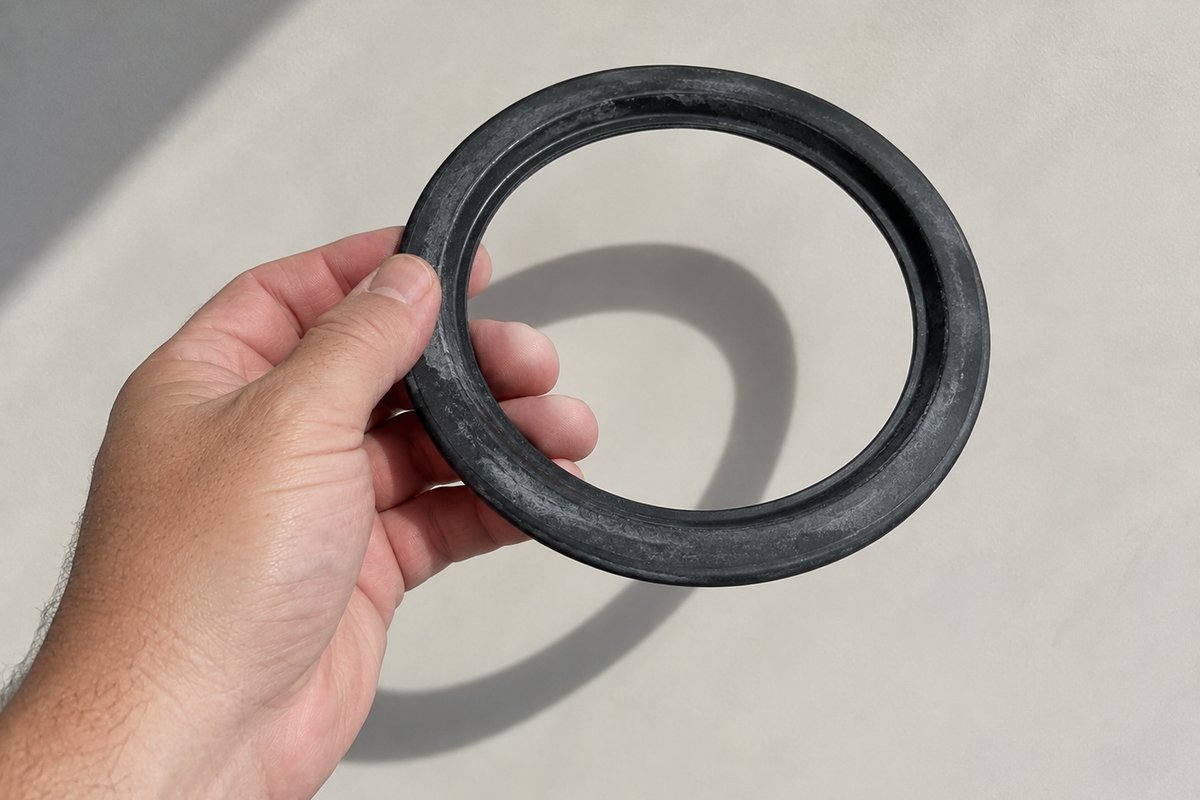
Almost always the seal, and almost always in the same way. The bowl stops holding water between flushes, and within a day or two the bathroom smells of the black tank because the ball valve is no longer sealing it off.
Thetford recommends replacing the lip seal every four to six years. Dometic publishes no interval at all and describes the cause instead: mineral deposits from hard water build up on the flush ball or the seal and hold it open a fraction. Both are treating the same failure, one with a calendar and one with a symptom.
A seal kit costs a fraction of a toilet. If the bowl won't hold water, replace the seal before concluding you need the whole fixture.
What toilet paper can you use?
Dometic states it in every gravity flush manual: flush only water, bodily wastes, and rapid-dissolving toilet tissue, and it names paper towels specifically as something to keep out.
Thetford publishes no general guidance at all. Its owner's manual has no toilet paper section. What it has is a product line of its own fast-dissolving tissue, described as breaking down quickly to reduce clogs. That's marketing copy for a product, not an instruction about what else may be used, and it shouldn't be read as one.
So one manufacturer answers the question, and the other sells you something instead. The instruction that exists is Dometic's, and it's sensible to follow whichever brand is on the floor. For which actual rolls pass a real dissolve test, including a couple of household brands that do, see this site's best RV toilet paper roundup.
Where the work stops
Swapping a gravity toilet is two bolts, a water line, and a seal, and it's inside what a careful owner can do. Three things aren't.
A flange that moves. If the flange rocks, or the floor around it is soft, the problem is the floor and not the toilet. Bolting a new toilet to a rotten subfloor hides it for a season.
Anything below the flange. The pipe from the flange into the black tank isn't a seal to be tightened from above, and a leak there is a tank job.
Macerating and vacuum systems. Those carry pumps, wiring and their own control logic. Nothing in this article applies to them.
Quick Answers
What decides whether an RV toilet fits?
Four things: the floor flange, the rough-in from flange center to back wall, the water supply, and the bolt spacing. The first three are published. Neither Thetford nor Dometic publishes a bolt spacing, so measure center to center between the two bolts before ordering.
Can you put a regular toilet in an RV?
Neither manufacturer publishes a position on it. A household toilet holds standing water in a bowl and tank and flushes with 1.6 gallons, while an RV toilet holds a little water above a sealed ball valve and empties straight down. For the feel of a home toilet, the residential height and residential seat models cost the same as the standard ones.
How much water does an RV toilet use?
Thetford publishes one quart per flush, and the same figure for the Aqua-Magic VI, Residence, Style II and Style Plus. Dometic publishes no per flush figure at all, only supply flow rate. The real variable is how long the pedal is held.
Should you choose a plastic or ceramic bowl?
Polypropylene is lighter, and Thetford publishes 10.75 pounds for the Aqua-Magic VI. Ceramic cleans more like a home toilet and stains less over years. Neither manufacturer publishes a weight for a ceramic model, so the penalty can't be quoted.
What fails on an RV toilet, and when?
Almost always the seal. The bowl stops holding water between flushes and the bathroom starts to smell of the black tank. Thetford recommends replacing the lip seal every four to six years. Dometic publishes no interval and names hard water deposits on the flush ball as the cause.
What toilet paper can you use in an RV toilet?
Dometic states it in every gravity flush manual: flush only water, bodily wastes and rapid dissolving toilet tissue, and keep paper towels out. Thetford publishes no general guidance, only a product line of its own fast dissolving tissue.
Where to go next
The toilet is one end of a system, and the rest of it has its own guides here.
- RV sewer hoses, which is what the black tank empties through, and where twenty feet in two sections beats one long hose
- RV water pressure regulators, since both manufacturers publish a maximum static pressure the toilet valve is built for
- Winterizing an RV, because the toilet valve and the seal are among the first things a freeze finds
- RV water filters, given that mineral deposits on the flush ball are what Dometic names as the cause of a leaking seal
For more on RV water systems and plumbing, see our other Water and Plumbing guides.