
Hit the brakes hard with a travel trailer behind you, and you find out in about a second what kind of controller is under your dash. A proportional brake controller reads how hard the truck is slowing down and asks the trailer for the same effort at the same moment. The older kind starts at zero and ramps up to whatever power you set, on a timer, whether you tapped the pedal or stood on it.
Most new trucks come with one built in, most travel trailers roll on electric drum brakes that need one, and almost nobody sets the gain properly. That last part is what decides how the RV stops.
Quick answer
A proportional brake controller uses a sensor that measures how quickly the tow vehicle is slowing and sends the trailer brakes a matching signal, right then. A time delay controller ignores that and ramps to a preset level on a fixed schedule. Proportional is what belongs behind a travel trailer, and the setting that decides whether it works is the gain, which you set by braking at about 25 miles an hour on dry pavement and backing the number down until the trailer wheels stop skidding.
Table of Contents
What does proportional mean on a brake controller?
It means the controller measures deceleration and works from that number instead of from a clock. Tekonsha puts it plainly in the P3 manual: the control uses an inertial sensor that detects deceleration and generates an output based on it, which is where the term "proportional" comes from.
So a gentle stop at a light sends the trailer a gentle signal. A hard stop for a deer sends it a hard one immediately, without waiting for anything to build. The trailer slows with the truck rather than after it, and the two stay in line.
What you feel is the difference between one stop and two. On a long downhill, braking is no longer a series of small shoves from behind, and the trailer no longer arrives at the intersection half a second late.
How is that different from a time delay controller?
A time delay unit has no idea how hard you're braking. Tekonsha describes its timed Brakeman IV as a control whose output ramps up over time at a fixed rate. Draw-Tite says the same about the Activator in its installation manual, where the sync control adjusts how long it takes to reach the full output you set once the brake pedal is pressed.
This is the key difference. The pedal is a switch, not a measurement. Press it lightly for two seconds, and the trailer eventually gets a firm application. Stand on it, and the trailer still starts from nothing and climbs the same ramp.
That is why a timed controller can feel fine around town and wrong in an emergency, which is the one stop where it matters. It's also why it can feel grabby in traffic, because a run of short taps keeps restarting a ramp tuned for a longer stop.
How do you tell which one you already have?
This is the question nobody answers, and it's the one most owners have. Every controller under a dash looks about the same. Three checks settle it, and none of them need a tool.
Look up the model name, not the shape. The name is printed on the face or on a label on the back of the housing. Tekonsha's proportional line runs P3, Prodigy, Primus, Voyager, and Sentinel. Its timed line is the Brakeman. Draw-Tite's Activator is timed. Once you have the model name, the manufacturer's own manual says which type it is in the first paragraph, usually by whether the words inertial sensor appear at all.
Look for a level adjustment. An older proportional controller has to know which way is downhill, so it carries a leveling knob and an indicator light. The Tekonsha Voyager manual has you hold the brake pedal on level ground and turn the level knob until the indicator shows orange. A timed unit never needs that, because there's nothing to level.
If your controller has a second knob whose job isn't power, that is a strong sign it reads motion. If the unit does nothing at all, that is a different problem, and what to check first on a dead brake controller starts with the connector rather than the box.
Do the parking lot test. Roll at about 10 miles an hour on a quiet piece of pavement, then brake once softly and once firmly. A proportional controller shows a clearly lower number on its display or a clearly weaker pull at the soft stop. A timed controller feels identical both times because it runs the same ramp either way.
Does your truck already have one?
On a late-model pickup with the factory tow package, the controller is already in the dash, and there's nothing to buy. It appears as a small slider or rocker near the steering column, with a gain value on the instrument cluster. The gain is adjusted from the truck's own menu rather than from a box under the dash, and the scale isn't the same from one manufacturer to the next, so the number that matters is the one printed in your own owner's manual.
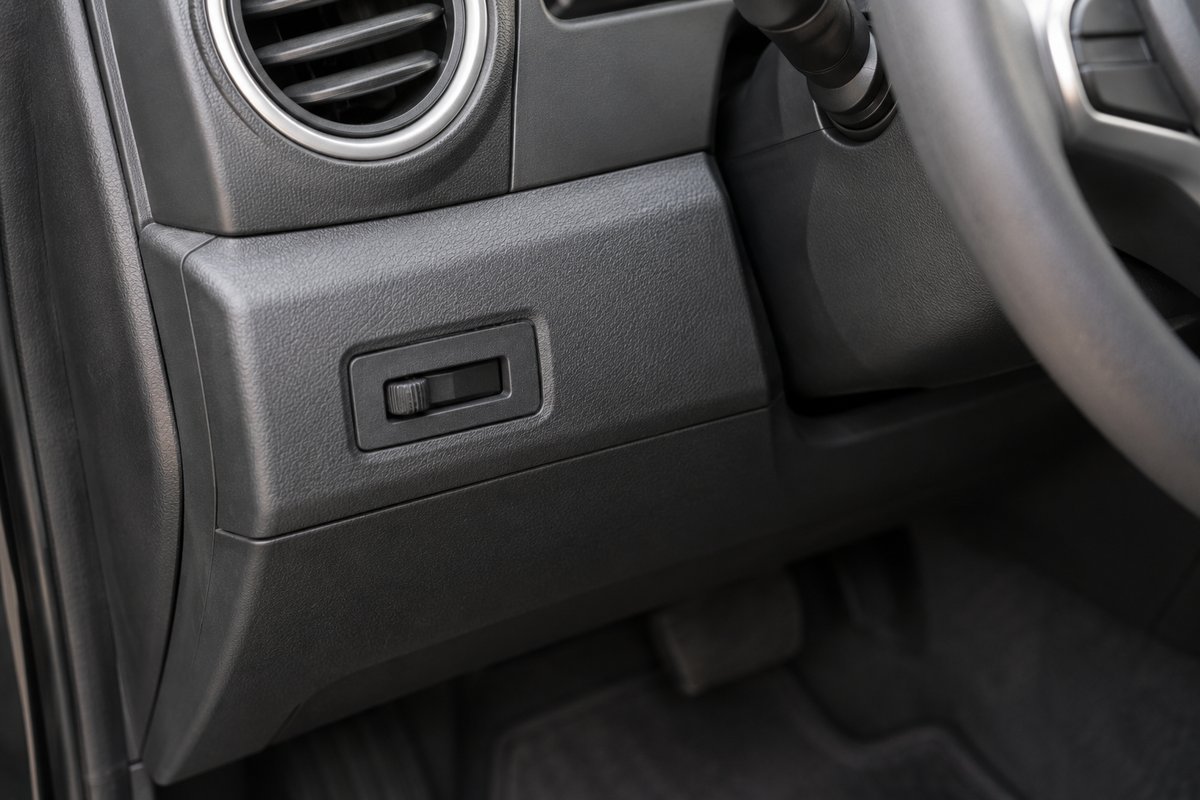
Check for that before you shop. Buying an aftermarket controller for a truck that already has one is the easiest money to waste in this category, and not one of the buying guides ranking for this term walks a reader through the check first.
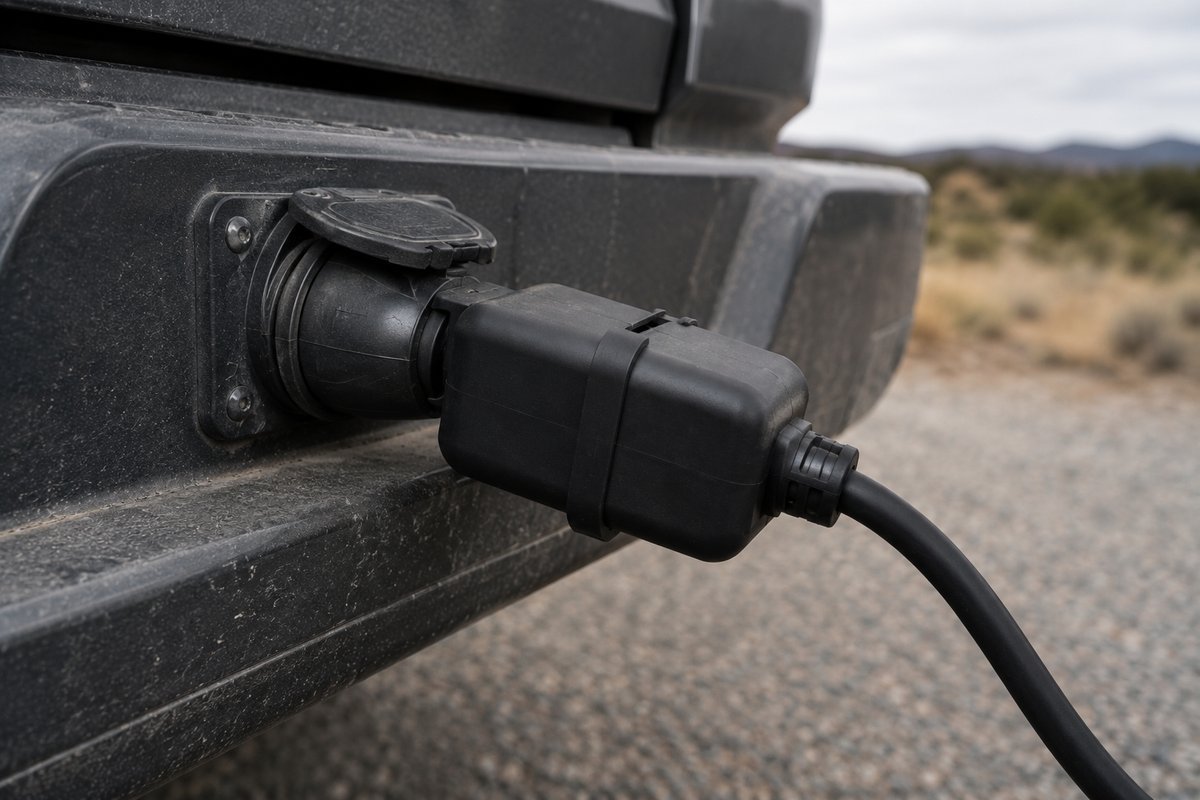
An aftermarket controller makes sense on an older truck with no factory unit, on a vehicle that came without the tow package, and on a second tow vehicle that pulls the trailer a few times a year. That last case is where a portable controller that plugs into the seven-way connector is worth a look, because nothing gets wired into the vehicle at all, unlike a hard-wired unit, where getting the four-wire hookup right is what makes or breaks the install.
One boundary, stated plainly. Installing a hard-wired controller means working on the circuit that operates your truck's brakes. Choosing one and setting the gain are owner jobs. Splicing into the vehicle harness is work for somebody who does it for a living, and the cost of a shop is small compared with what it protects.
How do you set the gain on a proportional brake controller?
Gain is the ceiling. It sets how much power the controller is allowed to send when it decides the trailer needs everything. Too low and the trailer pushes the truck. Too high and the trailer wheels lock and skid. That is dangerous, because a sliding tire can't steer, and a skidding trailer is how a jackknife starts. It's also hard on rubber, which usually ages out before it wears out anyway.
Tekonsha's P3 manual and Curt's Echo manual land on the same test, from different companies and different decades of design. Both use about 25 miles an hour, and both say to back the number down the moment the trailer brakes lock.
- Hitch up and load the trailer the way you tow it, with water in the tanks if that is how you travel. Gain is set for a weight, not for a trailer.
- Find a dry, level, paved road with nothing behind you. Tekonsha specifies a dry, level, paved surface for this, and a wet or loose surface will give you a number that's too low for real roads.
- Set the gain to the middle of its range to start. On a 0 to 10 scale, that's 5.
- Get up to about 25 miles an hour and apply the trailer brakes on their own with the manual override lever, which is the procedure Tekonsha's P3 manual gives. Using the override instead of the pedal takes the truck's own brakes out of it, so what you feel and hear is the trailer by itself.
- Raise the gain one step at a time and repeat until you hear or feel the trailer wheels skid, then back it down one step. That last step down is the setting. Tekonsha's warning is worth quoting on its own: the power should never be set high enough to lock the trailer brakes, because skidding trailer wheels cause a loss of directional stability of the trailer and the tow vehicle.
- Now drive it. Make a few normal stops with the pedal at road speed and feel where the effort comes from. If the trailer is pushing the truck, the gain is still low, and if the trailer pulls the truck back hard at every light, it's too high.
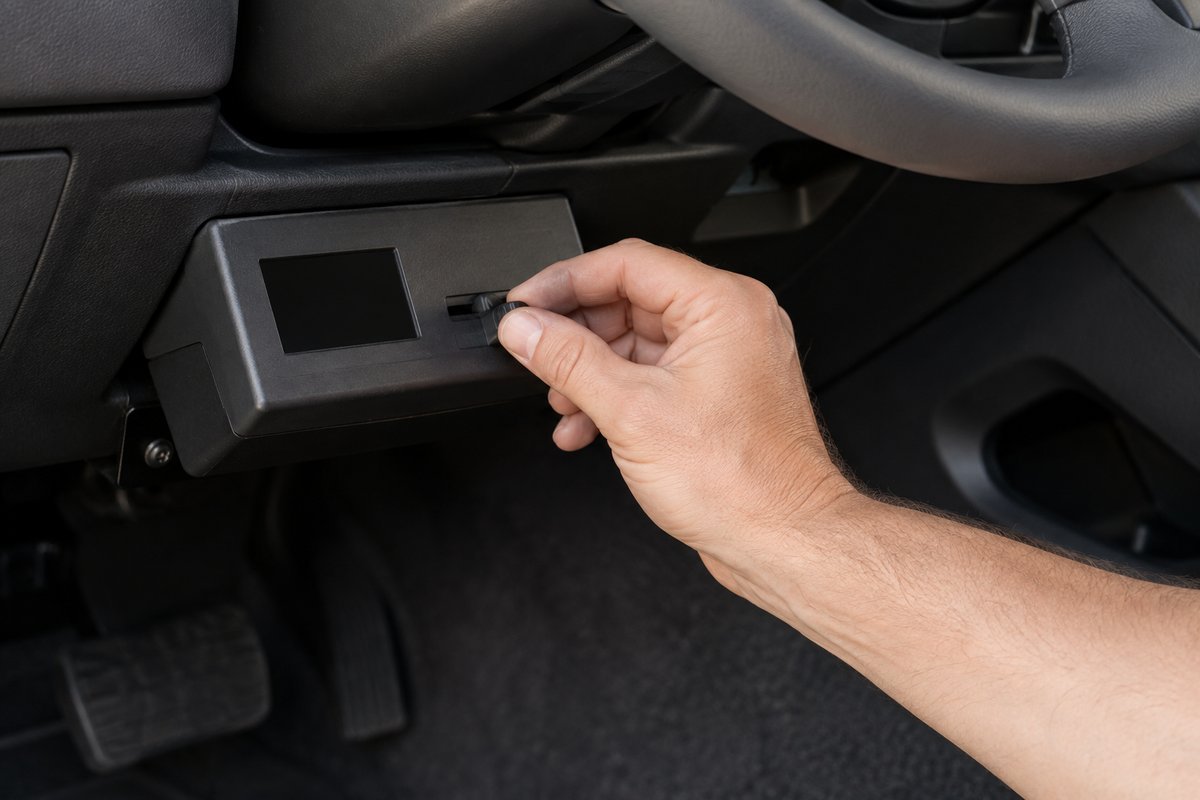
Not every controller has a lever. Curt's Echo is set from a phone while the vehicle is stopped, then checked on the same 25-mile-an-hour run, and its manual gives the same rule in different words: if the trailer brakes lock up, reduce the maximum output. Don't run this test on a wet road or in traffic.
Write the number down. Every trailer you tow gets its own gain figure, and so does the same trailer loaded and empty. Weight is the theme of the entire hitch setup, which is also why a weight-distribution hitch changes how the truck behaves under braking.
What does the boost setting do?
Boost is a head start. On the Tekonsha P3, three boost levels start the trailer brakes at a percentage of power the instant you touch the pedal, rather than from zero, and the manual gives the figures: B1 begins around 13 percent, B2 and B3 around 25 percent. Everything above that still works proportionally.
It exists for cases where the trailer is much heavier than the truck, and the manual adjusts its boost recommendation based on the ratio between the two. If the trailer is light behind a heavy truck, leave boost off. Turning it up because a stop felt soft is how you end up with a trailer that grabs at every light.
Not every controller has it. Neither the Redarc Tow-Pro Elite manual nor the Curt Echo manual describes a boost setting, and the Echo splits the same idea into two numbers: a maximum output and a sensitivity, both set from a phone while parked.
Does a proportional controller have to be mounted level?
Modern ones, no. Older ones, yes, and that difference explains a lot of secondhand controllers that never worked right.
Tekonsha's P3 manual states that the control acquires the proper level setting automatically and keeps adjusting as you drive up and down hills. Redarc's Tow-Pro Elite goes further and learns its own orientation, and its manual says it does so within about 20 brake applications, with the caveat that the braking has to be real. Pressing the pedal while parked teaches it nothing.
The older units are the ones with the knob. The Voyager manual allows a mounting angle from 20 degrees nose down to 70 degrees nose up and then asks you to level it by watching an indicator change color. If a used controller came out of a truck and into yours, that leveling step is the first thing to redo, because the angle it learned belongs to a different dashboard.
One thing stays true across all models. The unit must face the direction of travel and can't be moved once installed. A controller that slides in its bracket is measuring its own wobble.
What changes when the trailer is empty, or the road is wet?
More than the manuals admit. The gain number you set on dry pavement with a loaded trailer is the right number for exactly those conditions, and none of the five manuals checked for this article publishes a second figure for anything else. That includes the Tekonsha P3, the Tekonsha Brakeman IV, the Curt Echo, the Redarc Tow-Pro Elite, and the Draw-Tite Activator, all of which give one procedure on dry level pavement and stop there.
The physics doesn't stop there, though, and two situations come up on nearly every trip.
An empty trailer locks sooner. Less weight over the same brake shoes means less grip before the tire slides. A gain that was perfect with full fresh water tanks can skid a tire on the way home with the tanks drained. If you dump before a long drive, drop the gain a step and see how the first stop feels.
Wet and loose surfaces lock sooner still. The setting is made on dry pavement because that is where the number is repeatable, not because it's where you drive. On rain, gravel, or a wet campground road, expect the same gain to reach the skid point earlier, and ease it down rather than finding out at a stop sign.
Neither of these needs a chart. What matters is knowing that the gain knob is a setting for today's trailer on today's road, not a number you set once when the controller is new and never look at again.
What won't a brake controller do?
It does nothing for surge brakes. Curt states it plainly on its own types of trailer brakes page: surge brakes don't require a brake controller, because the system is self-contained and works off the trailer pushing against the coupler as the truck slows. Most travel trailers use electric drum brakes, but boat trailers and some rentals don't, and a controller does nothing on those.
It isn't the breakaway system. The breakaway switch is the pin and cable at the tongue that applies the trailer brakes if the trailer comes off the ball, and it runs from its own battery. The two share wiring, which is why Tekonsha's Prodigy manual warns, in capital letters, to disconnect the trailer plug from the tow vehicle before testing a breakaway switch, and separately warns that reversing the breakaway battery connection will destroy the controller. Test the breakaway, and do it unplugged.
It isn't universal across every trailer. Check the axle count and the brake type against the controller. The P3 covers one to four axles and handles electric or electric-over-hydraulic brakes. Redarc's Tow-Pro Elite is rated to three axles. The original Prodigy manual says outright that it isn't designed for electric hydraulic systems, which is the same brand taking two different positions across two models, so the model number matters more than the badge.
Nobody publishes a stopping distance figure
Every page selling a proportional controller says it stops more smoothly, and that is a reasonable claim. None of them says by how much.
The manuals and product pages opened for this article, which were the Tekonsha 90195 product page and P3 manual, the Curt Echo installation manual, the Redarc Tow-Pro Elite manual, the Tekonsha Brakeman IV manual and product page, and the Draw-Tite Activator manual, contain no tested stopping distance, no comparison against a timed unit, and no reference to a published test standard. The word used across all of them is "smoother," which describes feel.
That's worth knowing before you spend an afternoon reading comparisons. The case for proportional is a mechanical one: measuring deceleration beats guessing at it, and it's a good case. It isn't a measured one, and anyone quoting you a percentage got it somewhere other than the manufacturer.
The mistakes that show up on the first trip
- Never setting the gain at all. A controller out of the box isn't set for your trailer, and the factory default is a starting point rather than a setting.
- Setting it in a parking lot at walking pace. At 5 miles an hour, nothing locks, and nothing tells you anything. The test needs about 25.
- Turning the gain up because the truck feels like it's doing the work. The instinct is right, but the limit is the skid point. Raise it to the skid, then come back one step.
- Leaving one number in for every trailer. A loaded travel trailer and a bare utility trailer, both behind the same truck, are two different settings.
- Testing the breakaway switch with the trailer plugged in. The manual says it can destroy the controller, and that is a cheap mistake to avoid.
- Mounting the controller where a knee hits it. It has to stay exactly where it was installed, and it has to be reachable without taking your eyes off the road.
- Counting on the trailer brakes to hold it parked. They're a stopping system, not a parking system, which is what trailer wheel chocks are for.
What to buy
The two that do the actual work. If the truck has a factory-integrated controller, the answer is nothing. The money belongs in the trailer's brakes instead. If it doesn't, the hardwired unit worth looking at first is the Redarc Tow-Pro Elite, a proportional controller that learns its own mounting angle within about 20 real brake applications, so there's no leveling knob to get wrong.
Check the axle count before you buy: Redarc rates it for three axles, which covers a tandem-axle travel trailer and rules out a triple. It also carries a second mode you can set by hand for loose surfaces, which is the one thing on this page that addresses the gravel-and-wet-road problem with hardware rather than advice.
Worth having. A portable controller, if you tow with more than one vehicle or only a few times a year. The Curt Echo Mobile plugs in between the truck and trailer seven-way connectors with nothing wired into the vehicle at all, uses its own three-axis accelerometer rather than the phone's sensors, and stores a profile for each vehicle and trailer.
Read Curt's own support pages before you rely on it, because losing the Bluetooth connection leaves it holding the last saved setting rather than braking proportionally, and the manual override goes with it. The limit to know before you order is axle count again, because Curt rates the Echo for one to two axles, not three. Setting it means using a phone, and the app only allows adjustments while the vehicle is stopped.
Skip. A time delay controller, unless the budget won't stretch and the alternative is towing with no controller at all. Skip a used proportional controller without a manual, because you won't know whether it needs leveling, and the leveling procedure is model-specific. Skip anything sold on a stopping distance claim, because no manufacturer publishes one.
And watch what you're buying. Search a well-known part number like the Tekonsha 90160, and most of the first page returns listings whose titles say "replacement for" or that simply lead with the part number and a different brand name. Those aren't the product. Buy from the manufacturer's own storefront, and if the title has to mention somebody else's part number to tell you what it is, keep scrolling.
What it comes down to
A proportional brake controller is the right kind for a travel trailer, and you already have one on most new trucks. The part that changes how the RV stops isn't the hardware. It's twenty minutes on a quiet road at 25 miles an hour, raising a number until a tire skids and then backing it off, and doing it again when the trailer weight changes.
Quick Answers
What does proportional mean on a brake controller?
A proportional brake controller uses an inertial sensor to measure how quickly the tow vehicle is slowing, then sends the trailer brakes a matching signal at the same moment. A gentle stop gets a gentle application, and a hard stop gets a hard one.
What is the difference between proportional and time delay brake controllers?
A time delay controller has no idea how hard you're braking. It ramps to a preset output on a fixed schedule once the pedal is pressed, so a light tap and an emergency stop start the same way.
How do you set the gain on a proportional brake controller?
Hitch up loaded, find dry, level pavement, start at the middle of the range, and brake from about 25 miles an hour. Raise the gain a step at a time until the trailer wheels skid, then back it down one step.
How can you tell which brake controller you already have?
Look up the model name on the housing, check whether it has a leveling knob, and brake once softly and once firmly at about 10 miles an hour. A proportional unit reacts differently to the two stops. A timed unit feels the same either way.
Does a proportional brake controller need to be mounted level?
Current models set their own level automatically and keep adjusting on hills. Older units, including the Tekonsha Voyager and Sentinel, have a leveling knob and an indicator light that has to be set by hand after installation.
Do proportional brake controllers work with surge brakes?
No. Surge brakes are self-contained and work off the trailer pushing against the coupler as the tow vehicle slows, so they need no controller at all.