
An RV awning collects tree sap, road film and mildew faster than most owners check for it, and the wrong cleaner strips the waterproof coating faster than the dirt ever would. Carefree of Colorado, one of the two major awning fabric makers, is specific about what to use and what to avoid, and the two lists don't overlap the way you'd expect. Here's how to clean an RV awning without stripping the coating that makes it waterproof in the first place.
Table of Contents
What is the best thing to clean RV awning with?
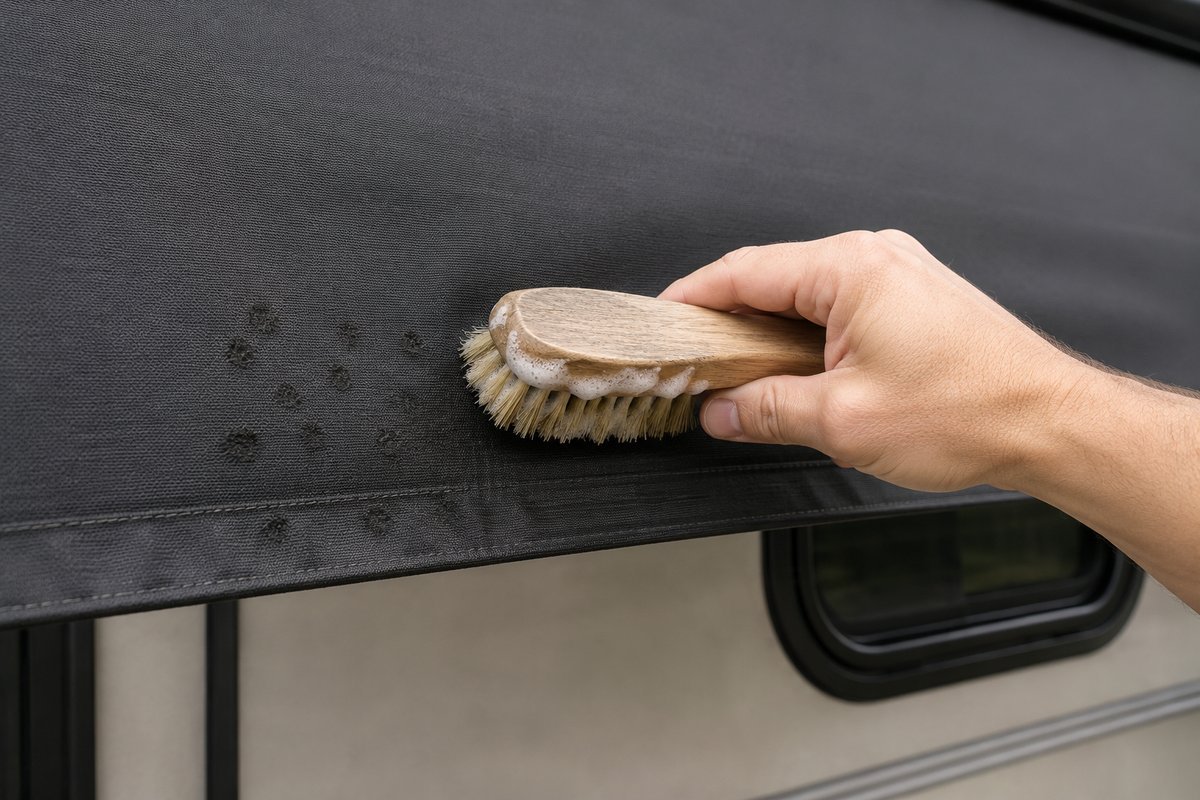
Natural soap and water, nothing else. Carefree's own care guide calls for natural soap rather than detergent, with water kept cold to lukewarm and never above 100°F. Vinyl-coated fabric gets a soft brush, acrylic fabric gets a stiffer one, and that's the entire recommended kit.
What's explicitly banned matters as much as what's recommended: no oil-based cleaners, and nothing caustic, granulated or abrasive. Those aren't gentle-versus-strong categories, they're the specific things that break down the coating that makes the fabric waterproof in the first place. A degreaser or an all-purpose cleaner from under the kitchen sink can fall into that banned category without the label saying so.
Can you use Dawn dish soap on an RV awning?
Dish soap is formulated to cut grease and oil, which is precisely the category of cleaner the manufacturer's own guide warns against for a waterproof coating. It may not visibly damage the fabric on one wash, but it's working against the coating every time it's used, which is the opposite of what a fabric meant to last years needs. Natural soap does the same cleaning job without that risk.
What is the best way to clean the underside of an RV awning?
The underside collects dust and spider debris that the top side, exposed to rain, mostly self-cleans. A hanging awning shade collects the same dust and washes the same way. The same natural soap and soft brush approach applies, worked from a ladder with the awning extended, rinsing thoroughly rather than letting soap dry on the fabric. Rinsing matters more on the underside because there's no rain to finish the job for you.
How often should an RV awning be cleaned?
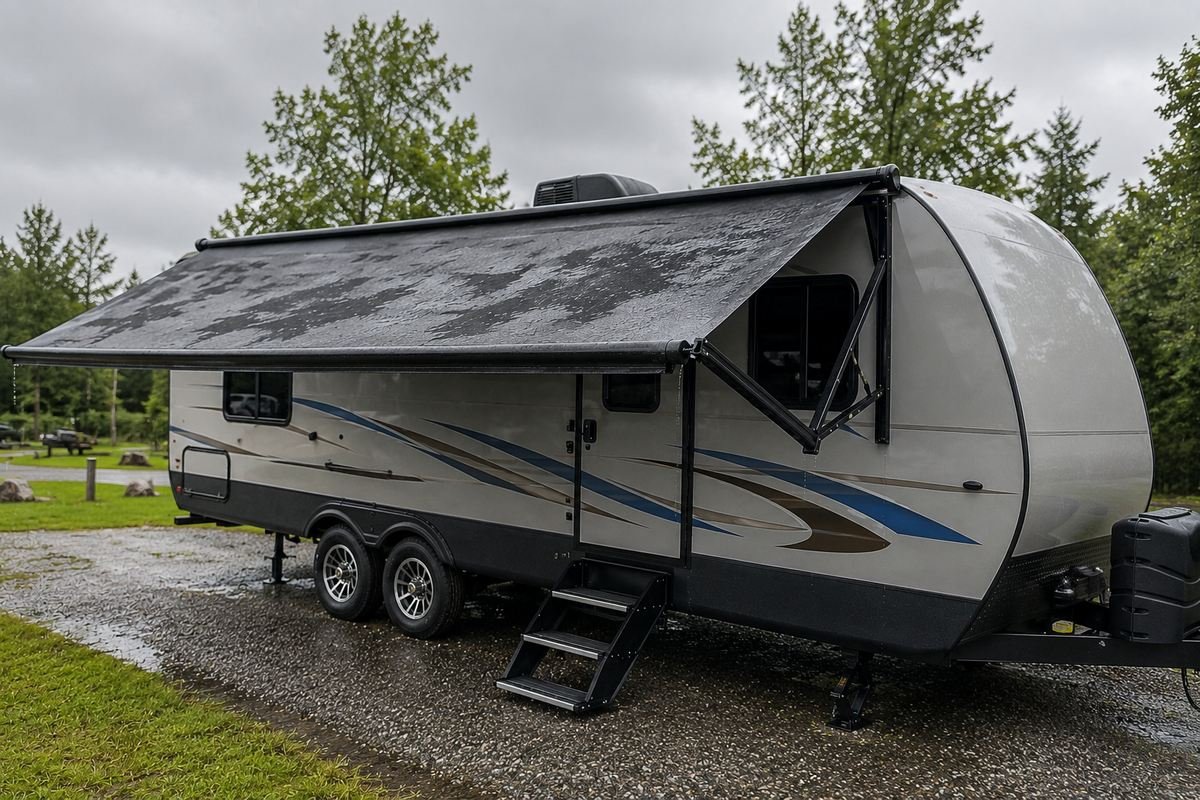
A monthly rinse with plain water keeps dirt from building into something that needs real scrubbing. A full clean, soap and brush both sides, is what an overdue awning needs, and it's recommended every two to three years under normal conditions. Humid climates push that timeline shorter, since mildew finds a foothold faster wherever the air stays damp.
What causes mildew, and how do you get rid of it?
Mildew is a fungus, and despite looking like a stain, it grows wherever heat and humidity sit together on the fabric for long enough. Vinyl-coated awning fabric has some built-in resistance, but nothing is immune once conditions are right. Treatment is the same natural soap wash, followed by a thorough rinse.
The step that matters most is what happens after: the awning needs to air dry completely before it gets rolled back up. Rolling a damp awning away just seals the moisture in with the fungus, so a mildew problem that got treated can come right back inside the closed roller tube.
Heat is never part of the process. No hair dryer, no parking in direct sun hoping it dries faster than usual. Air drying only, however long that takes.
Can I use Simple Green on an RV awning?
Diluted, yes, and plenty of RV owners do. Simple Green's own cleaning guide recommends a 1:10 mix with water for awnings. But several RV forums and awning-fabric guides warn that full-strength Simple Green is harsh enough to dry rot the stitching and glue seams over time, and it can etch aluminum hardware like the awning arms and roller tube. If you use it, keep it diluted, avoid spraying it straight onto seams and rivets, and rinse thoroughly afterward rather than letting it sit and dry on the fabric.
What it comes down to
Natural soap, water no warmer than 100°F, and a soft or stiff brush depending on the fabric. Skip anything oil-based, caustic or abrasive, including dish soap, even though it seems like the obvious household choice. Rinse monthly, deep clean every two to three years, and never roll the awning away wet.
Quick Answers
Can you use Dawn dish soap on an RV awning?
No. Dish soap cuts grease and oil, the exact thing the fabric's waterproof coating needs protection from. Use natural soap instead.
How often should an RV awning be cleaned?
A monthly rinse with plain water, plus a full soap-and-brush clean every two to three years under normal conditions.
What causes awning mildew?
Heat and humidity sitting on the fabric long enough for the fungus to take hold. Wash with natural soap, rinse well, and let it air dry completely before rolling it back up.
Can I use Simple Green on an RV awning?
Diluted (1:10 with water) it's fine. Full-strength, it can dry rot stitching and glue seams and etch aluminum hardware over time.
Related Guides
- RV awning repair: patching pinholes, tears and separated seams, and when the fabric needs replacing
- Manual vs. electric RV awning, which one holds up long term.
- RV roof sealant, which one your roof needs, and why the rules for a coating aren't the rules for a seam.