
Almost everything that goes wrong with RV plumbing comes down to one of three things. Too much pressure at the hookup, water you didn't filter, or waste you couldn't get rid of cleanly. This section covers those decisions in the order the water travels, which is also the order RV plumbing tends to fail in.
Who this is for. Anybody hooking a travel trailer up to a campground water supply, or emptying its tanks. If you're new to it, read down the page in order. It follows the water from the spigot to the dump station.
On this page
At the hookup
RV plumbing is built for domestic pressure, and campground water pressure isn't controlled and can spike well past what trailer plumbing is built for, which is the cheapest expensive lesson in RVing. RV water pressure regulators covers what the published figures mean and which ones are worth trusting.
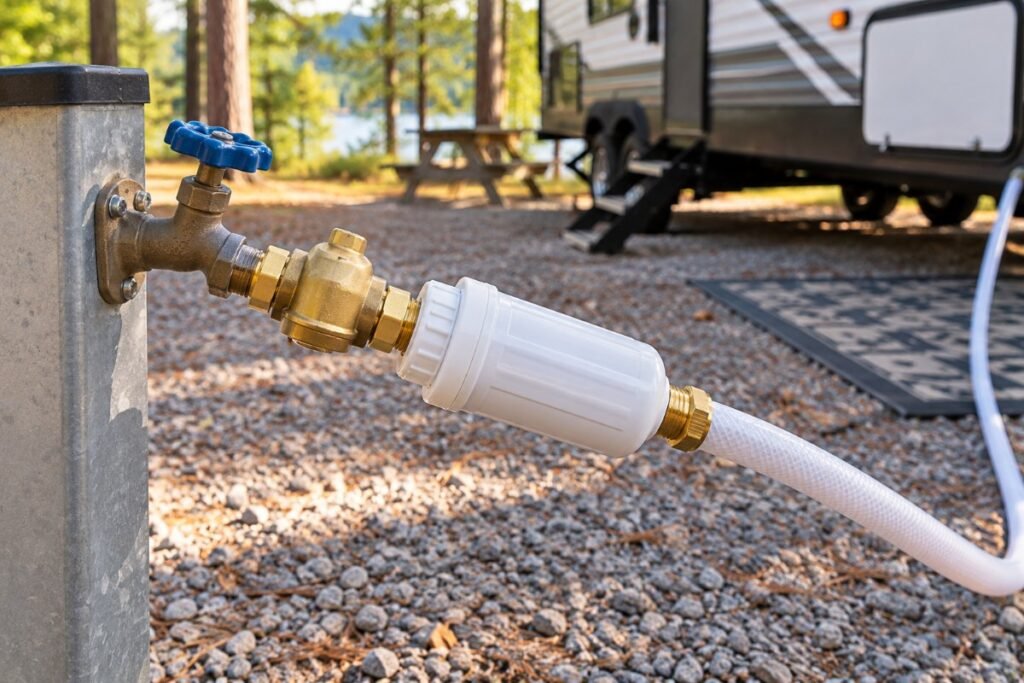
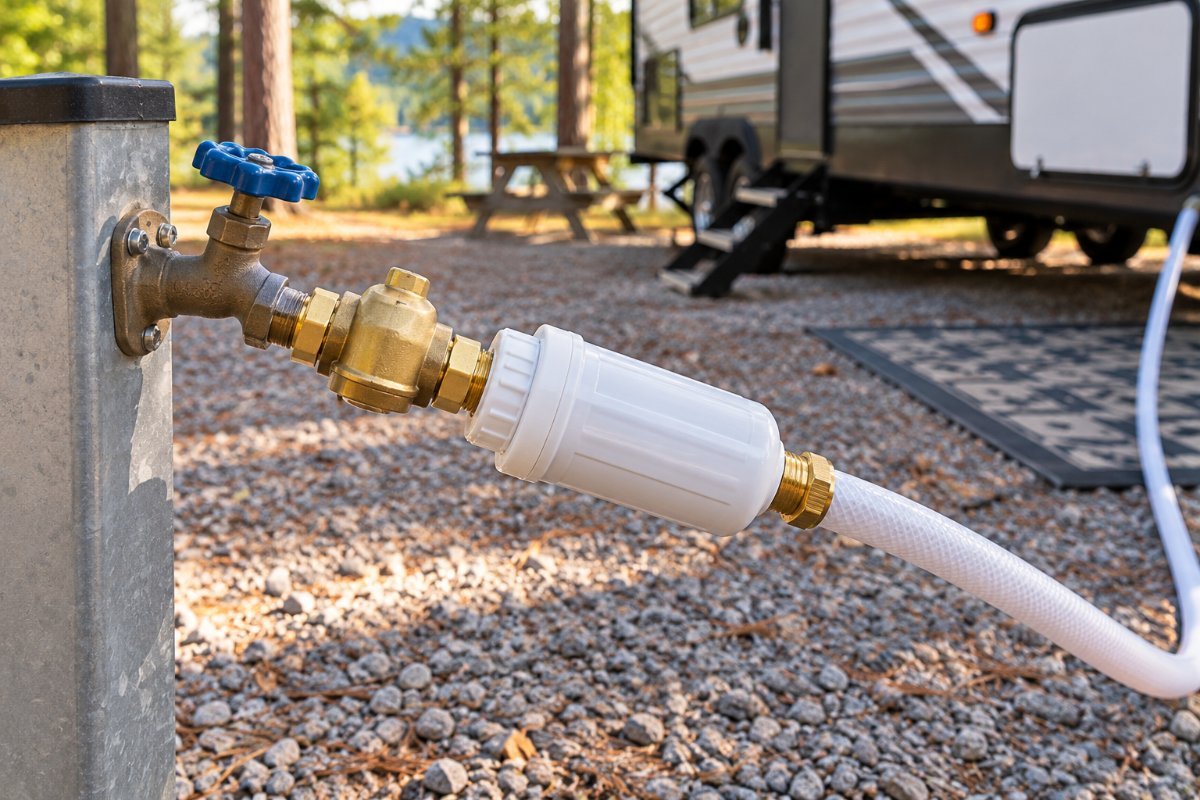
Filtering is the next decision and the one with the most marketing around it. RV water filters covers what a hose filter removes, what the certifications cover, and the gap between the two. The short version is that they do a real job on taste, odor, chlorine and grit, and not the job the packaging implies. NSF's own summary of the filter standards is the quickest way to read a label: NSF/ANSI 42 covers things like chlorine, taste and odor, and NSF/ANSI 53 covers health claims such as lead.
Waste
RV sewer hoses covers the fittings, the supports and the failure everybody who has owned one has a story about. This is a category where the cheap option is worse rather than just less pleasant. For keeping that hose on a steady downhill run, see our guide to RV sewer hose supports.
RV toilets covers what decides whether a replacement will fit, why neither Thetford nor Dometic publishes the one measurement you need, and five worth considering.
Best RV toilet paper covers the jar test that tells you in ten seconds whether a roll will clog a tank, and five picks that pass it.
When something breaks
RV water heater repair covers the most common failure in the system, what can be checked without tools, and where the line sits between an owner job and a shop job. Anything involving the propane side of a water heater belongs with a technician.
Most plumbing trouble shows up as a leak or a drop in pressure. A water heater is different, because it usually shows up as no hot water at all, and the guide covers what you can check yourself before it becomes a shop job.
Water you are not watching
The plumbing that causes the most damage is the plumbing nobody is standing next to. Water leak detectors covers what can be sensed in a trailer that is parked and empty, and says plainly that the leaks which matter in storage come from outside rather than from the pipes. Temperature sensors and freeze alarms cover the cold side of the same question.
RV plumbing checklist for the first hookup of the season
The first hookup after storage is when RV plumbing problems show up, because every fitting has had months to dry out or shift. Go in the same order the water travels and you'll catch most of them before they soak anything.
Put the pressure regulator on before the hose, every time, including the first time. Then flush the fresh lines by running every faucet until the water comes out clear, which also pushes out any antifreeze left from winterizing. Watch the fittings under the sinks and behind the water heater access panel while the system fills, since that's where a dried seal tends to weep first.
On the waste side, check the sewer hose for cracks before you need it, not while you're standing at the dump station. And if the trailer sat all winter, give the water heater a look before you light it, following the water heater repair guide.
Related
Draining and winterizing the system, and what is still at risk once it's done, sits in the RV storage and security guide and in storage and winterizing.