
This RV winterizing checklist walks you through what needs to happen before, during, and after you park your RV for the season. RV winter storage is not a passive activity, whatever it looks like from the driveway. A trailer in storage is not doing nothing. It is sitting still for five or six months while damp, mice, cold and a slowly flattening battery work on it. Almost everything in this section is about the months nobody is watching.
Who this is for. Anybody facing RV winter storage for the first time or the tenth. Work down the page in order, because these jobs are sequential. What you do before you park it decides how much the rest matters.
The Checklist: 7 Steps, In Order
- Know what you're protecting against. Read the RV storage and security guide first. Everything below assumes you understand what damp, mice, cold and a draining battery each do to a parked trailer.
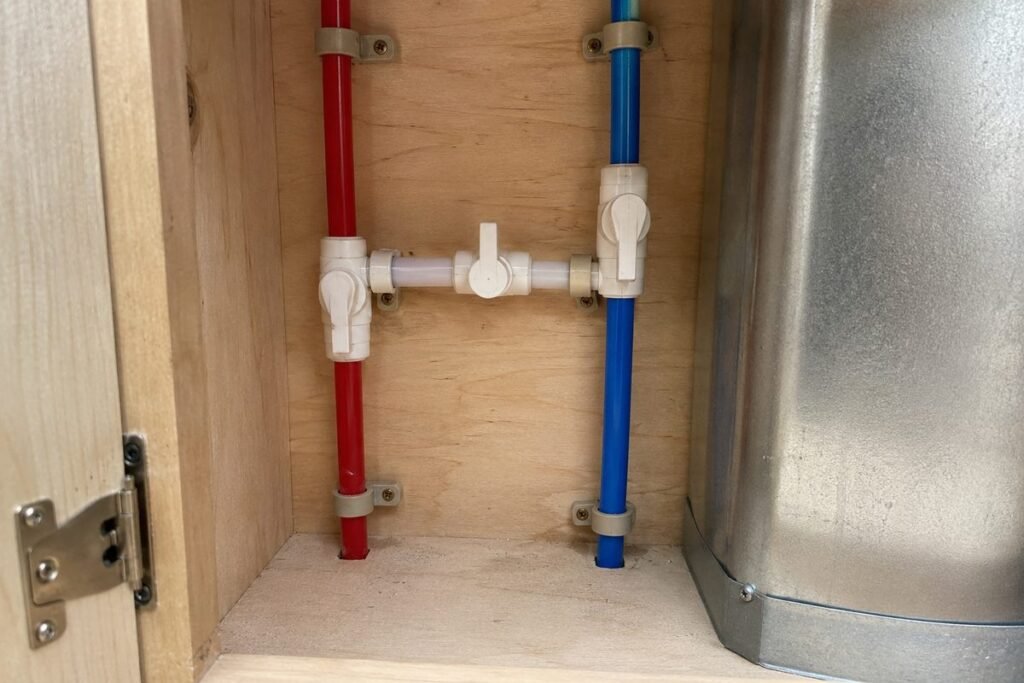
- Winterize the plumbing before the first hard freeze. Drain everything, bypass the water heater, then either blow the lines out with compressed air or push antifreeze through. Keystone's own instructions cap air pressure at 30 PSI. That is the safe number to use if your manual doesn't give one, since Winnebago allows up to 50 PSI on its own RVs. Two to three gallons of RV antifreeze (propylene glycol, never the automotive kind) covers a typical trailer. See how to winterize an RV for the full order of steps.
- Seal every gap a mouse could use. Get underneath with a flashlight and pack steel wool into anything the width of a pencil or wider: the wiring bundle, the tank fittings, the slide mechanism opening. Keeping mice out walks the full list of entry points.
- Choose a cover for damp, not for looks. A sheltered, damp spot calls for a breathable non-woven cover. An open, windy one calls for a coated woven cover. Never put either over a trailer that's still wet inside. RV covers covers the trade-off in full.
- Add moisture control once it's parked. Dri-Z-Air's own guidance is roughly one dehumidifying unit per 10-by-10-foot area, which puts a 30-foot trailer at about three units spread through the space. Dehumidifiers and moisture absorbers covers what works with no power available.
- Keep the battery from going flat. Even with everything switched off, one always-on draw like a propane leak detector (about 100 mA, roughly 2.4 amp-hours a day) can flatten a Group 24 battery in under a month, and a discharged lead-acid battery can freeze not far below the freezing point. Battery maintainers covers keeping it alive through the winter.
- Decide if you need a freeze alarm. RV antifreeze is rated to roughly −50°F, so a properly winterized trailer with nothing else stored inside doesn't need one. Freeze alarms covers who it's for: mainly catching a missed step, not backing up correct winterizing.
Start Here With the RV Winterizing Checklist
The RV storage and security guide covers what goes wrong inside a parked trailer and why, which is the context the rest of these articles sit inside.
Before you park it
Winterizing an RV is the one that has a deadline attached, because a split fitting behind a wall is the most expensive thing on this page and the cheapest to avoid. It walks the order the jobs go in, and it deals with the fact that Keystone and Winnebago publish air pressure limits that contradict each other.
Two more jobs pay for themselves before the trailer is even covered. Keeping mice out walks the actual entry points and what blocks them, which matters because a mouse problem found in spring is usually a wiring problem too.
RV covers covers the fabric weights manufacturers publish and the ones they don't, how to pad the sharp edges that wear a cover through, and why a cover put on a wet trailer does more harm than no cover at all.
While it sits
The two things that degrade quietly through RV winter storage are moisture and the battery. Dehumidifiers and moisture absorbers covers what works with no power available, and states plainly that no brand publishes a cold weather rating or a capacity curve against temperature.
Battery maintainers covers keeping a battery alive through a winter rather than buying a new one in spring. A discharged lead acid battery can freeze not far below the freezing point, which is why this matters.
Knowing if it goes wrong
A correctly winterized trailer is largely safe from freezing, and RV antifreeze is rated far below anything most of the country sees. That makes the real question what an alarm is for. Freeze alarms answers it directly, including the case for not buying one.
The RV Winterizing Checklist, In Order
If you only remember one thing, remember the order. Start with the RV storage and security guide so you understand what you're protecting against. Then work through winterizing an RV before any hard freeze, since a burst fitting is the expensive mistake here. Keeping mice out and choosing the right RV covers both pay for themselves before the trailer is even covered.
Once it's parked, dehumidifiers and moisture absorbers and a battery maintainer are what keep it from degrading quietly through the winter months. If you want an early warning instead of a surprise in spring, freeze alarms round out the checklist.
Follow that order and this RV winterizing checklist does exactly what it's meant to: nothing expensive breaks while nobody's watching. None of these jobs take long on their own, which is exactly why they're easy to skip. Set aside an afternoon, work through the checklist in order, and you won't be thinking about any of it again until spring.
Related
Locks, trackers and cameras live in trailer security and monitoring. Roof and awning care lives in roof and exterior.