
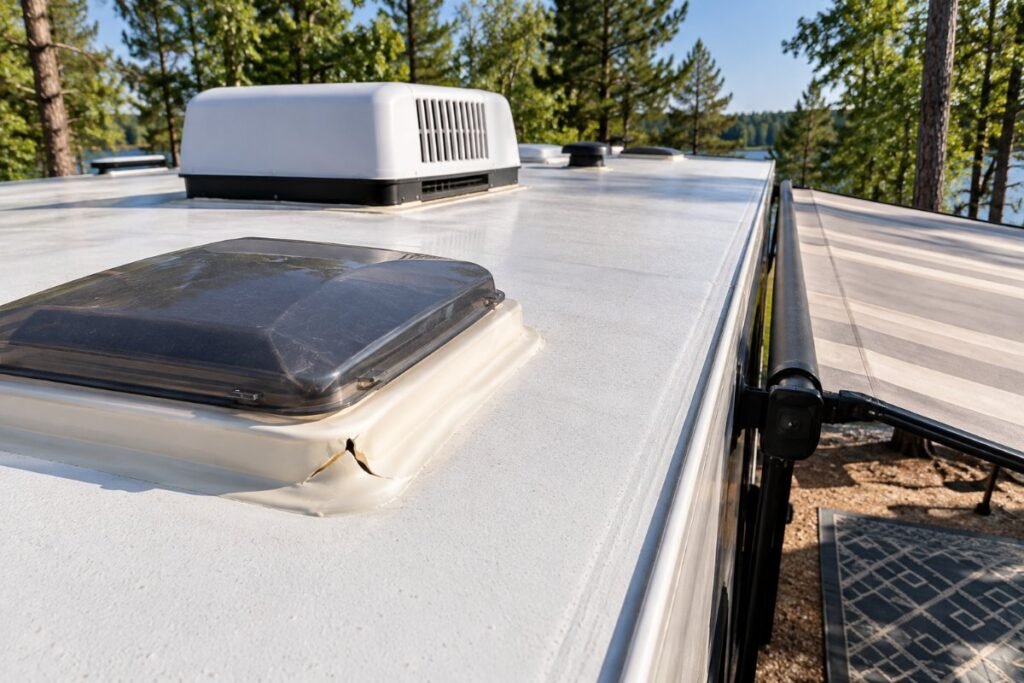
RV roof and exterior care covers everything on the outside of the trailer that keeps weather out and the exterior working the way it should. Two things dominate: the roof, which fails slowly and expensively, and the awning, which fails suddenly and cheaply.
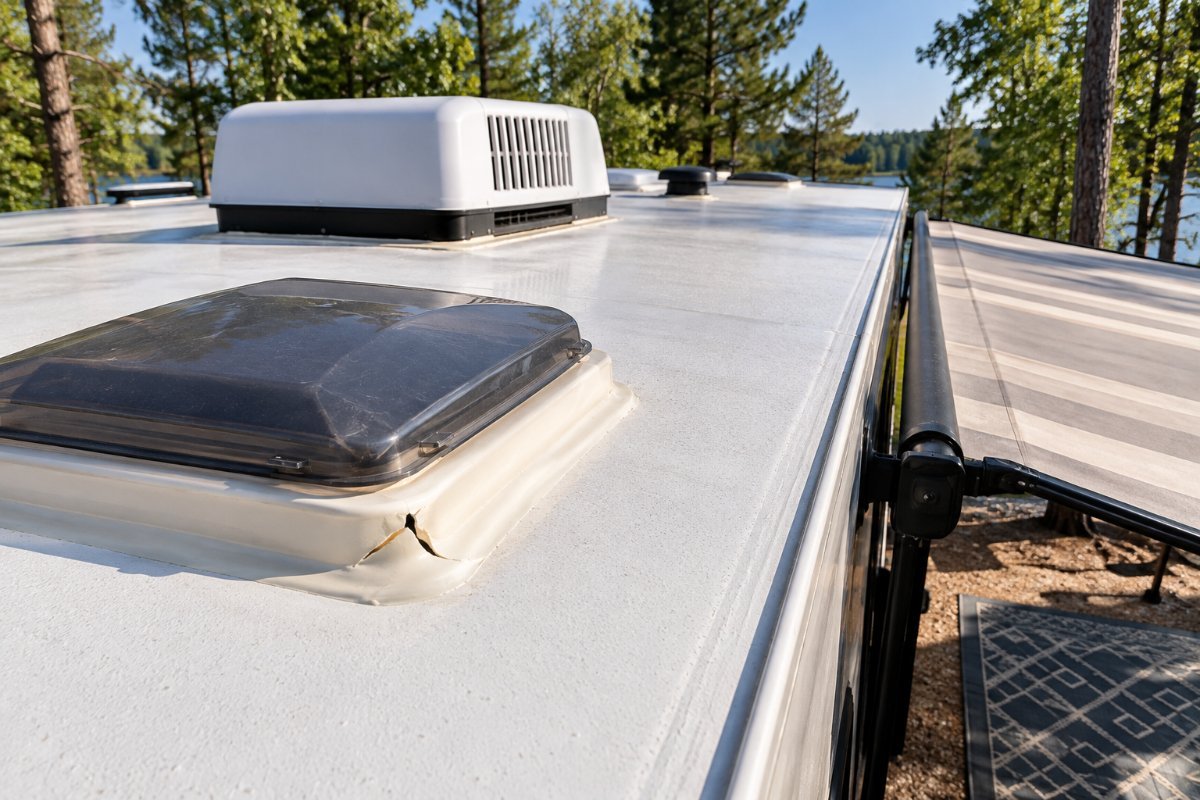
Who this is for. Anybody maintaining a travel trailer rather than repairing one after the fact. The roof section comes first because a roof problem found late is the most expensive thing on this site.
On this page
The roof
On an RV roof, sealant is the whole job, and the single decision that matters is which membrane you have, because the wrong sealant on the wrong roof does nothing. RV roof sealant covers how to tell EPDM from TPO on your own roof, which is the step every competing article skips, and which products the manufacturers say are compatible with each.
Choosing an awning
The first awning decision is made once and lived with for years. Manual versus electric awnings covers what each costs you in practice, what fails on each, and the conversion question for a trailer that came with one and wants the other.
Using it
An awning is a sun and rain tool, and most of what people want from one is shade at the side rather than overhead. RV awning shades and screens covers what a side shade does, how they attach, and the sizing that decides whether one is any use.
Keeping it working
Cleaning an RV awning covers the routine that keeps fabric from going, what is safe on vinyl and what isn't, and the mistake of rolling one up wet, which is how most awning fabric dies.
RV awning repair covers what to do when the fabric does fail: pinholes, tears and separated seams, which of them tape or a patch will fix, and when the fabric needs replacing. Lippert's own awning repair guide draws the line clearly: a seam tear longer than six inches means new fabric, not a patch.
A quick RV roof and awning check
Most of what goes wrong up top is cheap to catch and expensive to find late. Pick two moments you won't forget, like the week you de-winterize and the week you put the trailer away, and walk the outside with the same short list each time.
Start on the roof. Look at the sealant around every vent, skylight, antenna and the air conditioner, and along the front and rear edges where the roof meets the walls. Cracks, gaps and sealant that has pulled away from the edge are the spots water finds first. Before you buy a tube of anything, confirm whether the membrane is EPDM or TPO, because the roof sealant guide shows that the wrong product on the wrong roof does nothing.
Then unroll the awning all the way on a dry day. Hold a light behind the fabric and look for pinholes, check the seams along the roller tube, and make sure the fabric is clean and dry before it goes back in. Rolling it up wet is how most awning fabric dies, and the awning cleaning guide covers what's safe to use on vinyl.
Finish with the moving parts. A manual awning should extend and retract without a fight, and an electric one should run smoothly both ways without stalling. If either one sticks, the manual vs electric awning guide covers what usually fails on each type.
Related
Covering the whole trailer for a season sits in storage and winterizing rather than here.