
A recliner that came out of a furniture showroom usually asks for about a foot and a half of open floor behind it before it will lie flat. An RV wall hugger recliner needs closer to 3 to 4 inches, because of how the mechanism moves. That difference is the whole reason the category exists.
Table of Contents
What is a wall hugger recliner, and why does an RV need one?
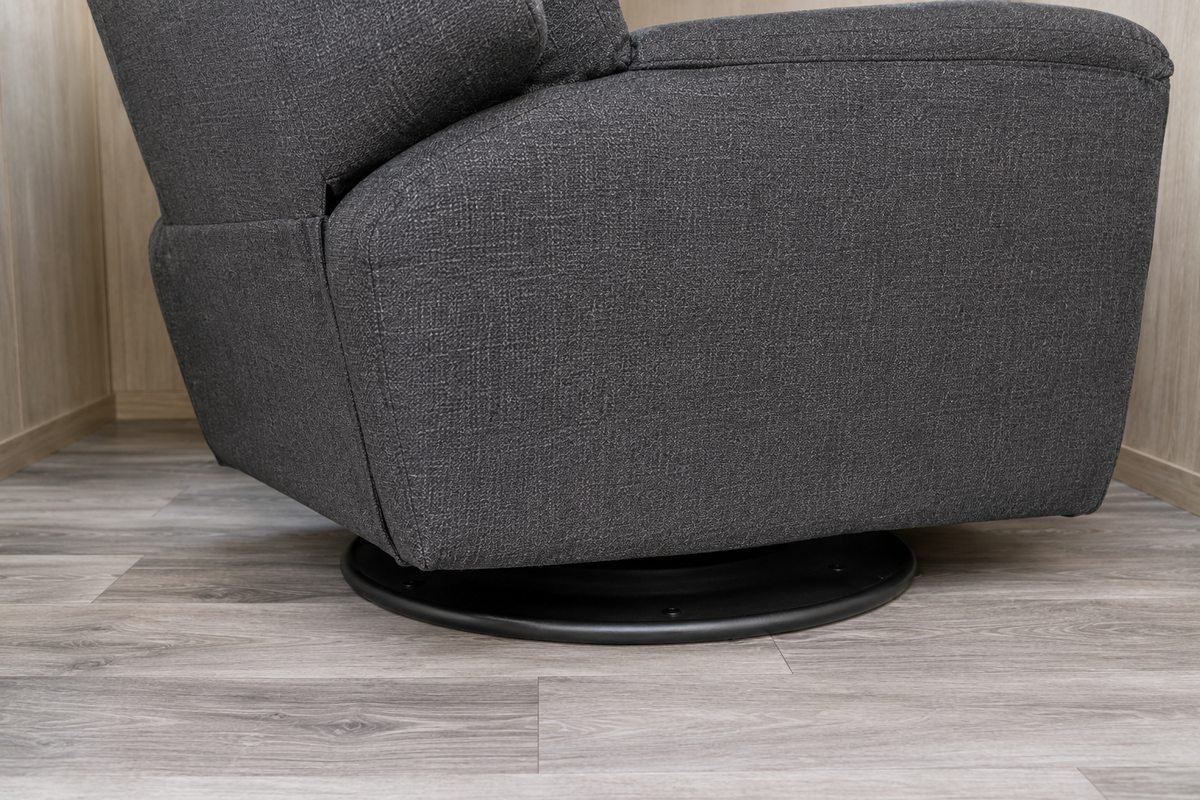
A standard recliner tips its whole back cushion backward when it reclines, which is why it needs floor space behind it. A wall hugger works the other way. The seat slides forward on a track as the footrest comes up, and the backrest barely moves. You end up further from the wall in front of you, not further into it behind you.
In a house, that's a nice-to-have. In a travel trailer, where a slide-out or a wall can sit 6 to 10 inches behind where a chair back would want to go, it's the difference between a recliner that works in that spot and one that doesn't fully open at all.
How much wall clearance does a wall hugger recliner need?
Three to four inches is the number that keeps coming up on RV-specific models. The RecPro Charles, a 30 inch wide RV wall hugger built for exactly this problem, needs 4 inches of clearance to fully recline in its powered version, or 3 inches on the non-powered model, against roughly 18 inches for a conventional recliner of similar size. The chair itself runs 38 inches tall and 37.5 inches deep in the upright position, extending out to about 62.5 inches deep once it's fully reclined.
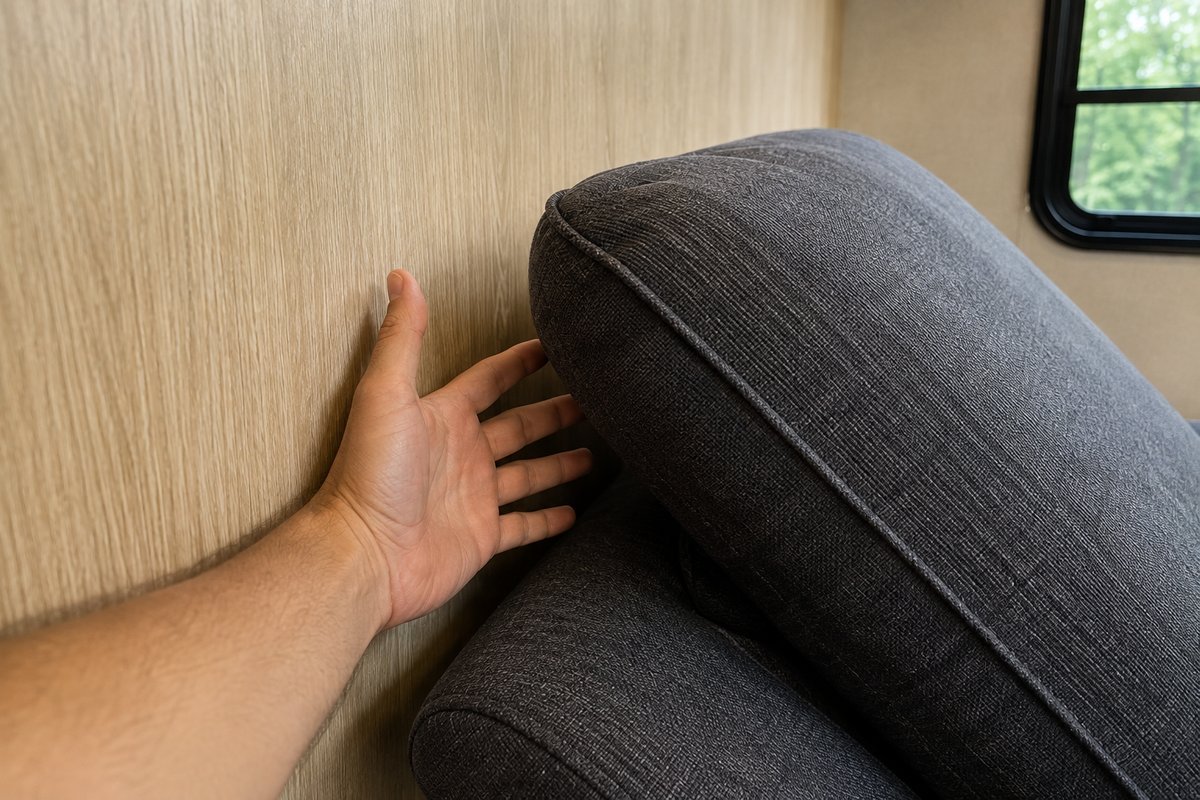
That extended depth matters as much as the wall clearance. A recliner that only needs 3 inches behind it can still need over 5 feet of open floor in front of it once it's laid out, which is worth measuring before you assume a wall hugger solves every space problem in a small living area.
Is a wall hugger recliner as comfortable as a regular recliner?
The mechanism doesn't change the cushioning, the lumbar support, or the recline angle you end up in. What changes is how you get there. Some people notice the seat sliding forward as a slightly different feel than a chair that tips back around them, especially in the first few uses. It's not a comfort compromise so much as a different motion to get used to.
Who makes RV-specific wall hugger recliners?
Thomas Payne, a Lippert brand, is the name that shows up most often in RVs straight from the factory. Their Signature Heritage and Signature Seismic lines are built specifically for RV theater seating and wall hugger clearance, and they're sold in a handful of named fabric colors rather than an open swatch book, which keeps replacement matching simple if a single seat needs swapping years later.
RecPro Charles 30" Powered Zero Wall RV Recliner, Mahogany
Purpose-built for RVsRecPro builds this one specifically for RVs, down to a 22-inch doorway fit and a single-seat listing rather than a matched sofa set. That focus is the whole reason it's on this list.
Reviewers who fit it into a slide-out or against a trailer wall report a snug, purpose-built fit, and the lighted control panel's built-in USB port is a small touch none of the general-purpose recliners here include.
What You'll Love
- Purpose-built for RVs, not a repurposed home recliner
- Sold as a single chair, so buying one doesn't commit you to a matching pair
- Fits through a 22-inch RV doorway per the maker's own spec
- Lighted control panel includes a built-in USB port
Worth Considering
- Multiple reviewers report the seams and material cracking within months of light use
- The manual return motion, leaning back to raise the footrest, feels stiff until it breaks in
- 14% of its ratings are 1 star, the widest spread of the three picks here
- No independently stated weight capacity, so heavier occupants should check with RecPro directly
Watson & Whitely Genuine Leather Wall Hugger Power Recliner, Grey
Most proven at scaleThis one isn't an RV-specific brand, but it's the most reviewed recliner on this list by a wide margin, and its rating held up across hundreds of buyers rather than a small early batch.
The headrest adjusts independently of the backrest, and reviewers spanning a wide range of heights and weights report a comfortable, sturdy fit.
What You'll Love
- The largest review base on this list by far, with 809 ratings behind the 4.5 average
- 350 lb published weight capacity, slightly below EONIX's 400 lb
- Backrest and headrest adjust independently for reading or watching TV while reclined
- Reviewers across a wide range of heights and weights report a comfortable fit
Worth Considering
- Doesn't lay fully flat, and a few reviewers with longer legs say their feet hang off the footrest
- Not an RV-specific brand, so its wall clearance is described only as a few inches rather than an exact figure
- The base is heavy enough that a couple of reviewers needed help carrying it in
EONIX Dual Motor Zero Clearance Wall Hugger Recliner, Cream White
Highest weight capacityEONIX pitches this one at compact rooms and RVs alike, and it's the only one of the three with independently reclining backrest and footrest motors, plus a heat and massage feature the other two skip.
That extra feature set is also where it loses points. Reviewers who bought it specifically for the heat or massage are the ones most likely to leave a low rating.
What You'll Love
- Highest published weight capacity of the three at 400 lb
- Backrest and footrest recline independently, not locked to the same motion
- Includes a heat and massage feature the other two don't offer
- Reviewers report quick, straightforward assembly
Worth Considering
- Several reviewers describe the massage motor as loud and underwhelming
- The heat feature runs weak enough that some reviewers say they can't feel it
- Not an RV-specific brand, so wall clearance isn't stated in exact inches
- 7% of ratings are 1 star, mostly tied to the massage and heat features underdelivering
Can you put a regular recliner in an RV?
Physically, you can fit a standard recliner into an RV if the ceiling height and doorway width allow it. The problem shows up when you recline it: a conventional recliner tips its whole backrest into the space behind the chair, and most RV living areas don't have the 15 to 18 inches of clearance that takes.
Push it up against a wall or slide-out and it either won't fully recline or it will bang into the wall every time. A regular recliner also isn't built with RV travel in mind, so it usually won't have the compact, modular construction that lets a wall hugger fit through a narrow RV door in one piece.
Do they make a wall hugger lift recliner?
Yes. Power lift versions of wall hugger recliners exist and use the same forward-sliding seat mechanism, so they still only need a few inches of wall clearance, but they add a motor that tilts the whole chair forward to help the occupant stand. Not every wall hugger model offers a lift option, so it's worth checking a model's spec sheet for "power lift" specifically rather than assuming every powered wall hugger includes it.
What size do you need?
Measure the wall clearance where the chair will sit, then measure straight out in front of it to where the footrest will land fully extended. A 30 inch wide chair is a common width for a single RV recliner slot, but the reclined depth, not the width, is what gets missed when someone orders one from a spec sheet alone.
What it comes down to
The 3 to 4 inch figure is the one worth remembering, because it's the range that makes a recliner physically possible in a spot where a conventional one wouldn't fit at all. Confirm the reclined depth in front of the chair separately. That's the measurement most people forget to check.
Quick Answers
Is a wall hugger recliner as comfortable as a regular recliner?
Yes. The cushioning and recline angle are the same. Only the mechanism that gets you there is different, sliding forward instead of tipping back.
Can you put a regular recliner in an RV?
Physically, often yes, but it needs 15 to 18 inches of clearance behind it to recline, which most RV living areas don't have. A wall hugger needs only 3 to 4 inches.
Do they make a wall hugger lift recliner?
Yes, power lift versions exist and still only need a few inches of wall clearance. Not every wall hugger model offers a lift option, so check the spec sheet.
What size wall hugger recliner do I need?
Measure the wall clearance behind where it will sit, then measure the open floor in front of it for the fully reclined depth. A 30 inch wide chair is a common single-recliner width.
Related Guides
- RV blackout curtains and shades, the other comfort upgrade worth doing to the same living area.
- RV mattress replacement, the same measure-first approach applied to the bed instead of the chair.