
Somebody cuts two cables, lifts the lid, and walks off with your battery. It takes under a minute and there's nothing on a factory travel trailer stopping them, because the battery is held down by a nylon strap and two hooks you can undo with your fingers.
An RV battery lock is the usual answer, and there are good ones. But before you buy one, there are two things worth knowing. The first is what the thief is after, which changes what kind of lock makes sense. The second is a safety rule about enclosing a battery that a lot of the advice online gets wrong, including advice from people who ought to know better.
Table of Contents
Your Battery Is Being Stolen for Scrap
This is the fact that should shape everything you do next. A used deep cycle battery is worth a little money at a scrap yard, because of the lead in it. That is all the thief gets. The thief isn't going to use it, sell it to another camper, or put it in a boat. They're going to sell it for scrap.
So a thief is wrecking a battery that cost you far more, plus your trip, to collect a small fraction of that. That tells you two useful things. They aren't motivated enough to bring a grinder and fight a steel box. They're absolutely motivated enough to spend three seconds on a strap that isn't locked.
Which means the bar you need to clear is low, but it isn't zero. Anything that turns a three-second job into a two-minute job with noise sends them to the next trailer in the row.
One more thing. There's no published data on how often this happens. No police department, insurance company, or industry group breaks out RV battery theft as a category. What exists is a large pile of consistent owner reports and a lot of marketing from companies selling boxes. Anybody quoting you a percentage made it up.
The Cheapest Fix Is Not a Lock
If your trailer sits in storage over the winter, take the battery home. It goes in the garage on a maintenance charger, and it isn't there to steal. It's also the easiest time to check what the battery has left, while it's sitting rested on a bench.
This isn't a shortcut. It's what most experienced owners do, and it solves a second problem at the same time. A lead-acid battery left on a trailer through a cold winter slowly discharges and sulfates, which shortens its life whether anybody steals it or not. Bringing it inside protects it from both.
Locks are for the trailer that stays hitched, or sits at a seasonal site, or lives in a lot you visit every few weeks. If that's you, keep reading.
Read This Before You Build a Box
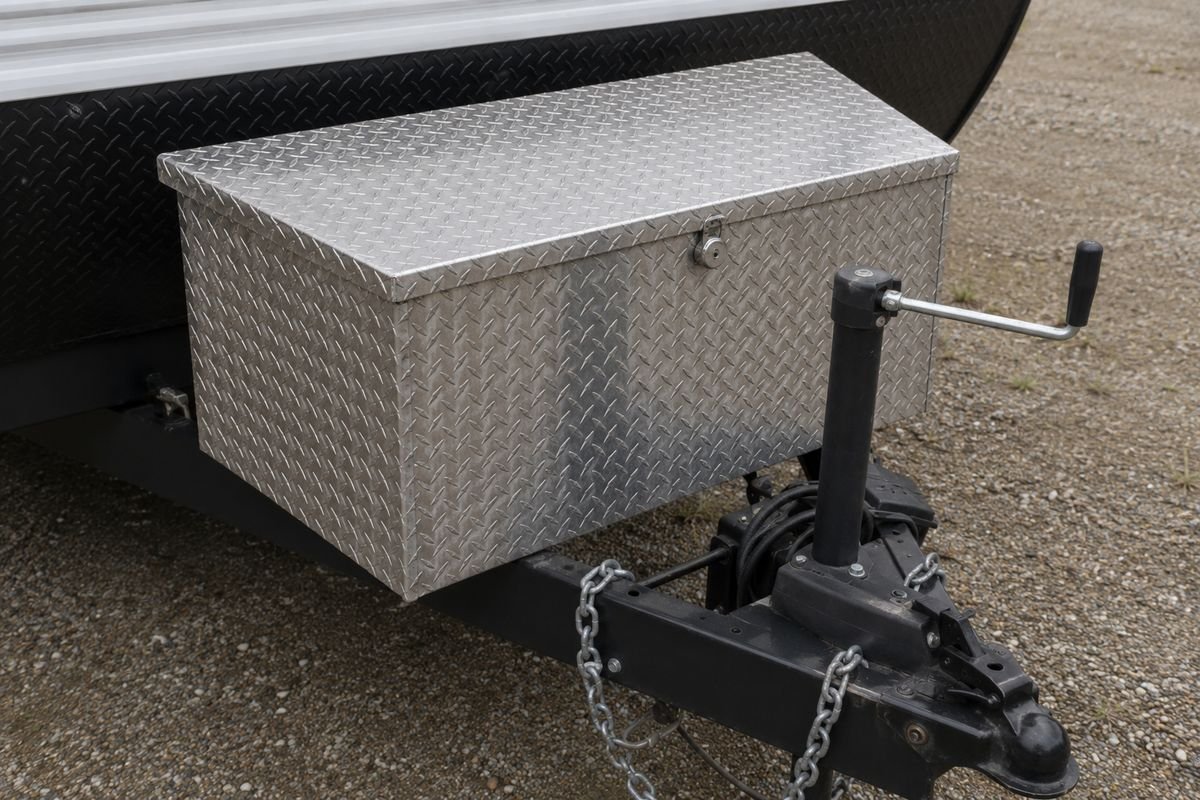
The most common piece of advice on this subject is to put a lockable steel toolbox on the tongue and set the battery inside it. Don't do that without reading this section.
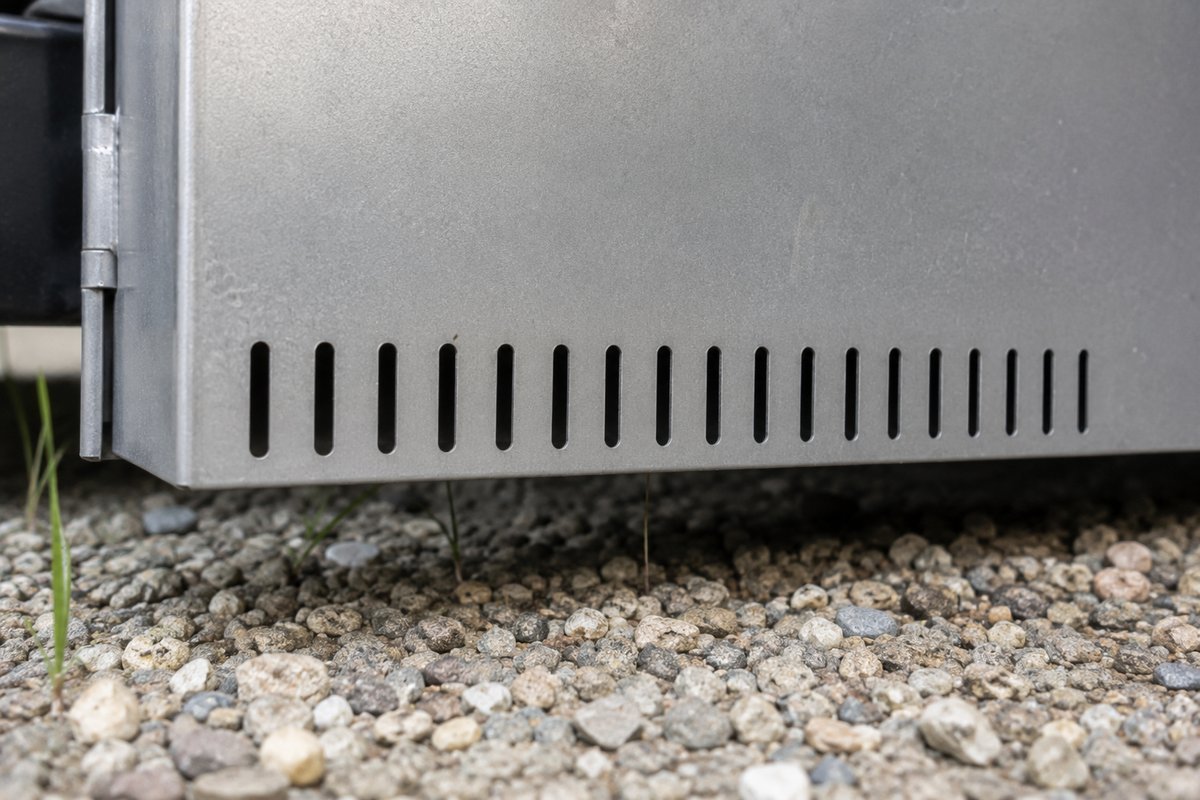
A lead-acid battery gives off hydrogen gas while it charges, which is why OSHA requires ventilation for enclosed battery charging areas. On the tongue of a trailer, in the open air, that gas blows away, and nobody ever thinks about it. Seal that battery inside a weatherproof steel box, and the gas has nowhere to go. It collects, right next to your propane tanks, and on a lot of trailers near the converter as well.
The rules that govern how RVs are built take this seriously. The standard for low voltage systems in recreational vehicles requires that a battery compartment be sealed off from the inside of the trailer and vented directly to the outside. The matching state regulation puts a number on it: openings of at least 1.7 square inches at the top of the compartment and 1.7 square inches at the bottom. It also says batteries must not go in a compartment that contains anything that can spark or make a flame.
A truck toolbox is designed to keep water out. It has no ventilation at all. That is the opposite of what you need.
The same goes for the aluminum lock boxes
Search for a battery lock box, and you will find smooth aluminum cases sold as weatherproof lockers, with no vents anywhere and no mention of ventilation in the listing. They look like the right product, and they're the same hazard as the toolbox. If a seller doesn't say the box is vented, assume it isn't, and don't put a lead-acid or AGM battery in it.
Sealed and AGM batteries are not exempt
This one surprises people. The rule covers sealed lead acid batteries too, and it says so in as many words. The belief that an AGM battery is maintenance-free and therefore safe to shut in a cabinet is wrong.
An AGM has a pressure relief valve. Under normal charging it stays shut. Under overcharging, which is exactly what a failing converter does, it opens and vents hydrogen. The one condition where you most need the ventilation is the condition people assume can't happen.
Lithium is the exception
If you have switched to lithium, this whole section stops applying. Lithium iron phosphate batteries don't vent hydrogen and don't need a vented compartment. They can go in a sealed enclosure, and it's the one case where a fully closed lockable box would be safe. Boxes sold for lithium are usually still vented, which does no harm.
The tradeoff you can't avoid
A box that's properly vented for a lead-acid battery will let water in. Owners of the larger vented boxes report exactly that after heavy rain. The temptation is to caulk the vents shut, and that puts you right back in the hazard. Live with the water, drain it, and keep the vents open.
Which RV Battery Lock Works?
Take the battery home
Free, complete, and it protects the battery from winter as well. Covered above. It's the right answer for a stored trailer, and everything below is a second best.
A locking metal battery box
This is the only category that both holds the battery down and secures it, and the good ones are engineered with built-in ventilation. It's also the expensive answer. See the picks below.
A steel shackle over your existing box
A steel frame that runs under, over and through the plastic box you already have, closed with padlocks. Much cheaper than a metal box. The catch is that it anchors to your plastic box, so it only works if that box is new and solid. An eight-year-old box that has been baking in the sun is brittle, and a thief doesn't have to defeat the steel. They kick the plastic.
A cable through the handle
Mostly for show. The handle molded into a plastic battery box snaps. If the cable doesn't go around something structural, it isn't doing anything.
The cheap version
Replace the wing nuts on the hold-down hooks with lock nuts that need a wrench, and run a padlock through the strap. It won't stop anyone determined. It absolutely stops the walk-by who was counting on undoing it by hand, and that's who takes most of these batteries.
Three Locking Battery Boxes
These aren't three versions of the same thing. The first is the proper locking box. The second protects the box you already own for a fraction of the price. The third is what to buy if that box is too far gone to be worth protecting. Prices move, so check before you order.
One warning before you buy anything with a lock built into it. Read the section on keys further down this page first.
Torklift PowerArmor A7708R
The proper locking boxDiamond plate aluminum with a locking lid, and it's vented, which is the part that matters. Air moves through the slots in the bottom and the access hole at the back. That is the difference between a purpose built battery box and the truck toolbox this article tells you not to use.
Inside it measures 26-1/2 inches long, 7-3/8 wide and 12-9/16 deep, which takes two Group 27, two Group 31, or a pair of 6 volt golf cart batteries. There's a grommeted hole for your cables so they aren't chafing on a cut edge, two hold down straps, and an acid neutralizing mat. Lifetime warranty, made in the United States.
Two problems. It costs more than the flooded batteries inside it, which is hard to justify unless you're running lithium. And it ships on the common industry key, the same one discussed further down this page. Swap the cylinder the day it arrives.
The venting is also bottom only. There's no vent at the top, where hydrogen collects. It's far better than a sealed box and it isn't perfect.
What You'll Love
- Vented, so it's safe with lead acid
- Takes two 6 volt golf cart batteries, which many boxes won't
- Acid neutralizing mat and straps included
- Lifetime warranty and made in the United States
Worth Considering
- Costs more than the flooded batteries it protects
- Ships on the common industry key, so change the cylinder
- Venting is bottom only, with nothing at the top
- Heavy enough that you want a second pair of hands
Vigilante Battery Shackle
The low cost answerA welded steel frame that goes over the plastic battery box you already own and closes with padlocks. It's hinged, so it needs no clearance either side, and it fits Group 24 through 31. There's a single version and a dual for two batteries.
This is the pick that matches what the article argues. A scrap thief is after a small payout in lead. Turning a three second job into a two minute one with a hacksaw sends them to the next trailer, and this does that for a fraction of what a metal box costs.
It also sidesteps the safety question completely. Your existing plastic box keeps whatever ventilation it was built with, because the shackle sits outside it rather than replacing it.
The catch is the box underneath. The shackle anchors to it, so it only works if that box is sound. An eight year old case that has been baking in the sun is brittle, and a thief doesn't need to beat the steel. They kick the plastic. If yours is old, see the next pick.
What You'll Love
- A fraction of the price of a metal box
- Leaves your existing box's ventilation alone
- Hinged, so it needs no side clearance
- No tools to fit it
- Single and dual battery versions
Worth Considering
- Padlocks aren't included
- Only as strong as the plastic box underneath it
- Thirty day manufacturer warranty, which is short
- Does nothing to weatherproof the battery
Camco 55370 Vented Battery Box
Replace a brittle box firstIf your plastic box is cracked, chalky or brittle, replace it before you spend anything on locking it. This is the vented double, side by side, for two Group 24 batteries.
The reason to buy this specific kind rather than any box is on the label. It's built to United States Coast Guard 183.420 and ABYC E-10.7, which are the marine standards covering battery installation, and vented boxes are what they call for. That is a published standard you can look up, which is more than most of this category offers.
Pair it with the shackle above and you have a sound box, proper ventilation and a lock for well under half the price of an aluminum case. That is the combination this article would put on a trailer carrying flooded batteries.
What You'll Love
- Vented by design and built to a published marine standard
- Cheap enough to replace on a hunch
- Pairs with the shackle above for a complete answer
- Fresh plastic gives the shackle something solid to hold
Worth Considering
- Doesn't lock on its own, so it needs the shackle
- Group 24 only, so no good for Group 31 or golf cart batteries
- Plastic will eventually go brittle again in the sun
The Key Problem Nobody Mentions
Walk down a row of RVs and try the storage bay doors. On a startling number of them, one key opens all of them. The RV industry standardized on a small handful of cam lock codes years ago, and blank keys for them are sold openly and cheaply.
Locking battery boxes have been shipped with the same kind of cylinder. It's worth checking what is in yours, because an expensive aluminum box that opens with a key half the campground already owns isn't doing the job you paid for.
The fix is cheap and quick. The cylinder unscrews, and a replacement with its own key is inexpensive. Do it the day the box arrives, before you forget. The same swap is worth doing on your storage bay doors while you have the tools out.
Making Sure It Fits
Battery sizes are described by group number. The three you will meet on a trailer are Group 24, Group 27 and Group 31.
- Group 24 is about 10-1/4 inches long, 6-3/4 inches wide, and 8-7/8 inches tall.
- Group 27 is about 12 inches long, 6-3/4 inches wide, and 8-7/8 inches tall.
- Group 31 is about 13 inches long, 6-3/4 inches wide, and 9-3/8 inches tall.
Notice that all three are the same width. Length is the only real difference between a 24 and a 27, and a 31 adds about half an inch of height on top of that. So when you're asking whether a battery will fit a box, you're almost always asking about length, and sometimes about height.
Two things people often get wrong. Measure the inside of your existing box, not the outside, because the walls are thicker than they look. And measure your battery to the top of the terminal posts, not the top of the case. Published heights are sometimes given one way, and sometimes the other, and a lid that won't close over the posts is the most common fitment failure there is.
Then check the tongue itself. Measure the flat area you have to work with, and check what the box will hit when you crank the jack or swing the propane cover open. Boxes get returned because they fit the battery and not the trailer.
Common Questions
Is an RV battery lock worth it?
For a flooded lead-acid battery, a box that costs more than the battery inside it is hard to justify. Put a padlock through the strap and take the battery home over the winter. For lithium, the math flips completely, and the box is worth it.
Can I put my battery in a sealed toolbox?
Not a lead-acid or AGM battery. They give off hydrogen while charging and need ventilation top and bottom. A lithium iron phosphate battery can go in a sealed box safely.
Do AGM batteries need venting?
Yes. The pressure relief valve opens and vents hydrogen if the battery is overcharged, which is exactly what happens when a converter fails. Maintenance-free doesn't mean sealed.
Will a locking box stop a determined thief?
No. It stops the person who was counting on a thirty-second job with no tools, and that's who takes almost all of these batteries. Somebody who brings a grinder gets your battery regardless.
Should I disconnect the battery in storage?
If it stays on the trailer, yes, disconnect it so nothing drains it. Better still, bring it inside and put it on a maintenance charger.
The Short Version
- The thief is only after scrap lead, so the bar you need to clear is low but not zero.
- For a stored trailer, take the battery home. Free, and it protects the battery from winter too.
- Never seal a lead-acid or AGM battery in an unvented box. They give off hydrogen, and your propane tanks are right there.
- Lithium doesn't vent and can go in a sealed enclosure.
- Replace the lock cylinder on any RV compartment or box that arrives with a common industry key.
- A padlock through the strap and lock nuts on the hold-down hooks costs very little and stops most of what happens.
- Measure the inside of the box and measure your battery to the top of the posts.
Related Guides
- Wheel locks and coupler locks for travel trailers
- GPS trackers for travel trailers
- RV storage security, the complete guide
- Entry door locks, the key code problem, and the recall worth checking before you buy.
- Hitch locks, the difference between a receiver lock and a coupler lock, and why most people buy the wrong one.