
A Coleman RV air conditioner comes down to three real choices once you rule out the units that don't fit your roof: the Mach 3 Plus for a standard trailer, the Mach 8 Plus if you want a low profile shell and a heat pump, or the Mach 15 Plus when 13,500 BTU won't keep up with your climate or your RV's size. Coleman-Mach has built rooftop units for RVs for decades, and the whole line still bolts onto the same 14 inch by 14 inch roof opening, so picking the right one is mostly about BTU output, height, and whether you want heat pump function built in.
This guide walks through all three current Mach models with real listings and specs, then covers sizing by RV length, the low-profile versus standard height tradeoff, what a Coleman AC draws on a generator, and where a repair stops being a do-it-yourself job. Before you buy a Coleman RV air conditioner, check what your generator or pedestal can start, not just what it can run.
Quick Answer
For most travel trailers between 20 and 32 feet, the Coleman-Mach 3 Plus (13,500 BTU) is the right size without paying for capacity you won't use. If you want a shorter roofline and shoulder-season heat without the furnace, the Coleman Mach 8 Plus (15,000 BTU with heat pump) is worth the higher price. For fifth wheels, larger motorhomes, or desert climates, step up to the Coleman-Mach 15 Plus (15,000 BTU).
The picks
Coleman-Mach 3 Plus, 13,500 BTU
The standard pick for a 20 to 32 foot trailerThe Mach 3 Plus is the unit most trailer owners end up with, and there's a simple reason for it. At 13,500 BTU it matches the cooling load of a typical single-zone trailer in the 20 to 32 foot range without asking you to pay for capacity you won't use.
It bolts onto the same 14 inch by 14 inch roof opening that Dometic and other Coleman-Mach models use, so a straight swap on an existing RV doesn't involve any new roof cutting. It's a cool-only unit. There's no heat pump function built in, so pair it with your furnace for cold nights.
Good
- Matches the cooling load of most 20 to 32 foot trailers without oversizing
- Fits the standard 14x14 roof opening, so it drops into an existing cutout
- Straightforward cool-only operation with fewer parts to fail
Bad
- No heat pump, so you still need the furnace once temperatures drop
- Standard height profile catches more wind than the low-profile Mach 8
Coleman Mach 8 Plus, 15,000 BTU with Heat Pump
The low-profile pick, with heat added inThe Mach 8 Plus solves two problems the Mach 3 Plus doesn't address. It stands about 8 inches shorter than a standard rooftop unit, which cuts down on wind drag and the low bridge and low garage door clearance problems that come with a tall AC. It also adds a heat pump, so on a 40 degree morning it can pull warmth from the outside air instead of leaning on propane alone.
At 15,000 BTU it has more headroom than the Mach 3 Plus, which matters in a larger single-zone RV or a trailer that sits in direct sun most of the day. The heat pump function works best above freezing. Below that, you're back to the furnace, the same as any RV heat pump.
Good
- Low profile height cuts wind noise and drag at highway speed
- Heat pump stretches shoulder season use before the furnace has to run
- 15,000 BTU gives more margin than the Mach 3 Plus in full sun
Bad
- Highest price of the three, and the heat pump adds complexity to service
- Heat pump output drops off once temperatures near freezing
Coleman-Mach 15 Plus, 15,000 BTU
The pick for desert heat and 35+ foot RVsThe Mach 15 Plus is built for the RVs and climates where 13,500 BTU isn't enough margin. Fifth wheels and larger motorhomes with more glass and more roof surface, or anyone who spends real time in Arizona or Texas summer heat, benefits from the extra 1,500 BTU over the Mach 3 Plus.
It uses the same 14x14 roof cutout as the rest of the Mach line and keeps the cool-only design, so there's no heat pump to add cost or complexity. It's the standard height profile, not the low-profile Mach 8 shell, so factor that into wind noise and clearance if that matters for your RV.
Good
- Highest cooling output of the three for hot climates and larger RVs
- Same 14x14 cutout as the Mach 3 Plus, so upgrading from that unit is a direct swap
- Cool-only simplicity keeps the price below the Mach 8 Plus
Bad
- Standard height means more wind drag than the Mach 8's low profile
- No heat pump, so cold weather still runs through the furnace
Quick comparison
| Model | BTU | Height | Heat pump | Best for |
|---|---|---|---|---|
| Coleman-Mach 3 Plus | 13,500 | Standard | No | 20 to 32 foot trailers |
| Coleman Mach 8 Plus | 15,000 | Low profile | Yes | Low clearance RVs, shoulder season |
| Coleman-Mach 15 Plus | 15,000 | Standard | No | Fifth wheels, hot climates, 35+ foot RVs |
Matching BTU to your RV's length
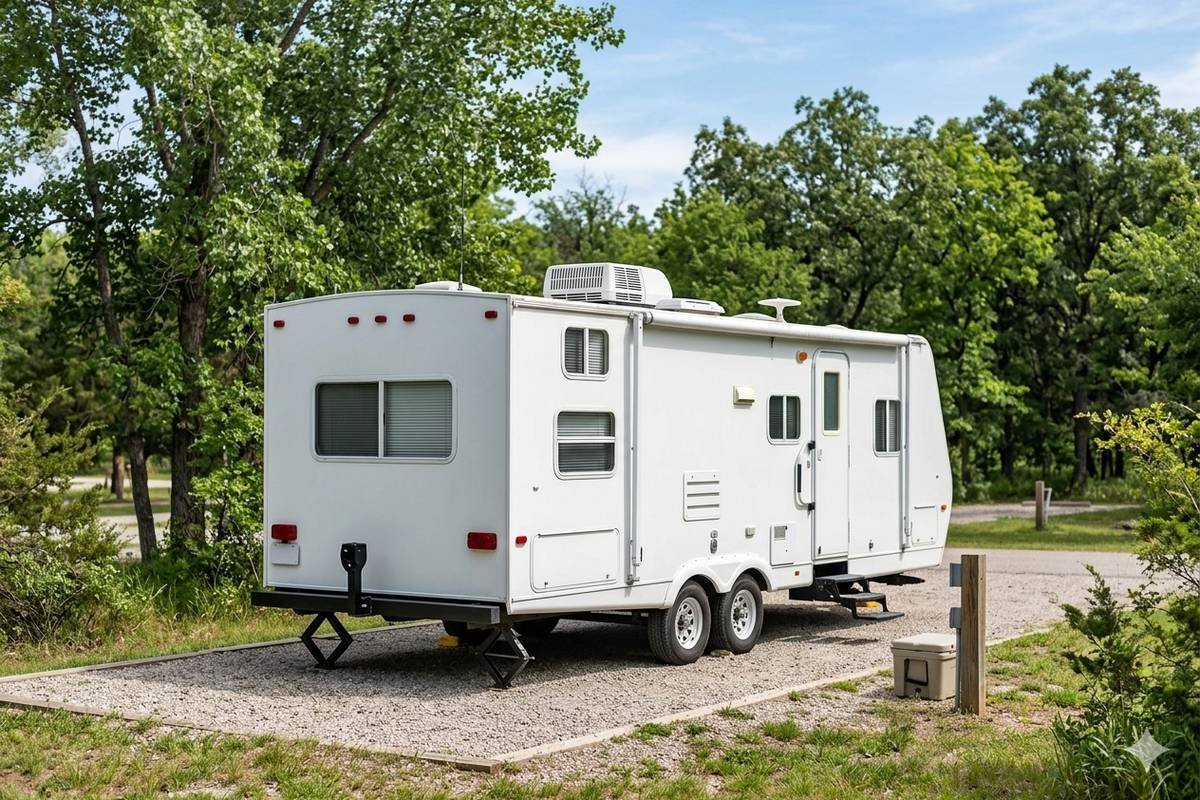
BTU needs scale with roof surface and glass area more than with floor plan alone, but length is still the quickest first check. A single 13,500 BTU unit covers most trailers up to about 32 feet in moderate climates. Past that, or in an RV with a lot of slide-out glass, a lot of owners either step up to 15,000 BTU or run two smaller units on opposite ends of the roof instead of one large one. Fifth wheels and larger motorhomes in the 35 foot and up range, especially ones that see regular triple-digit heat, are where the Mach 15 Plus earns its extra 1,500 BTU over the Mach 3 Plus.
Insulation, window count, and how much direct sun the RV sits in during the day all shift these numbers in either direction, so treat length as a starting point and not a hard rule.
Low profile versus standard height
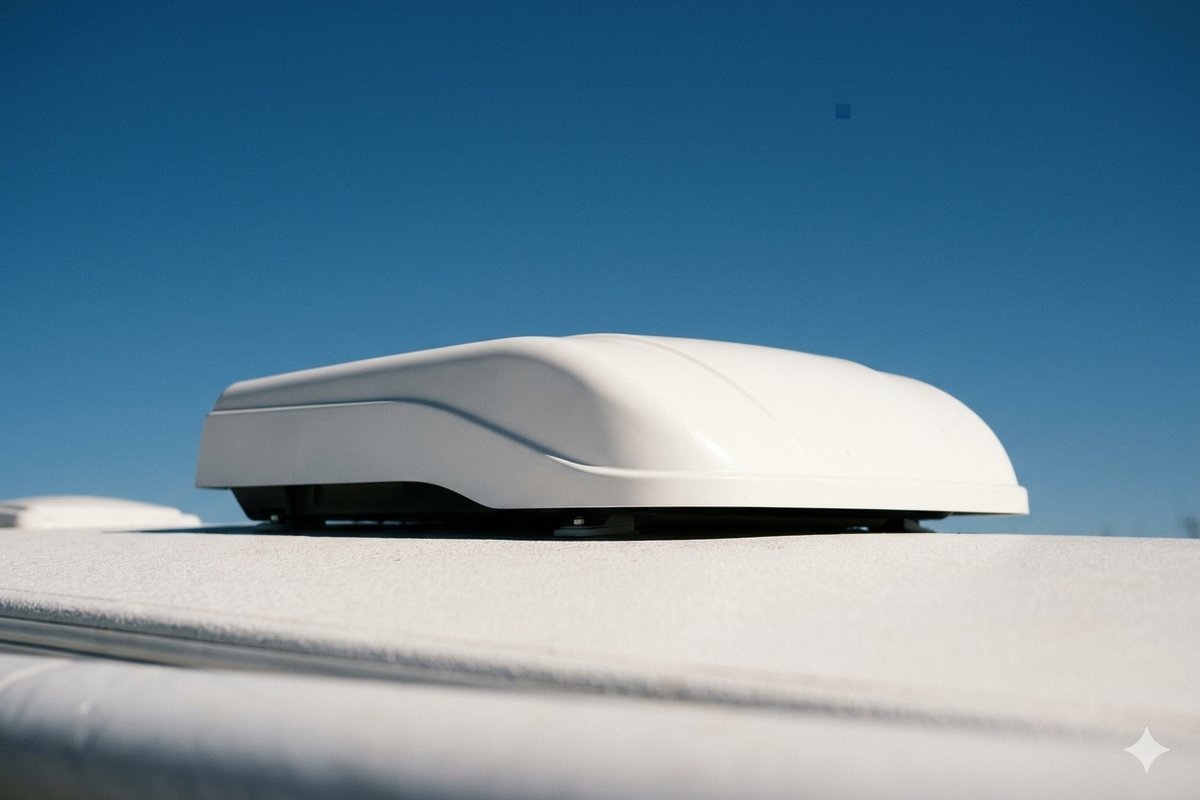
The Mach 8 Plus sits about 8 inches shorter than the Mach 3 Plus and Mach 15 Plus. That difference matters in two situations: driving under low clearance obstacles like older gas station canopies and parking garages, and highway wind noise, since a shorter unit disturbs less air at speed. It doesn't change the cooling math. A low-profile 15,000 BTU unit cools the same square footage as a standard-height 15,000 BTU unit. The tradeoff is purely physical clearance and drag, plus the added cost of the shorter housing and the heat pump that comes bundled with it on the Mach 8 Plus.
Running a Coleman AC on generator or shore power
All three of these units draw a heavy surge current on startup, the same as any RV rooftop air conditioner, before settling into a lower running draw. If you plan to run on a portable generator rather than shore power, check your generator's surge wattage rating against the compressor's startup draw, not just its running wattage. Our RV air conditioner pillar guide covers the generator sizing math and surge current numbers in more detail, since that math is the same across brands and doesn't need repeating here for the Coleman lineup specifically.
When it's a job for a technician
Swapping a Coleman-Mach unit onto an existing 14x14 roof opening is within reach for a lot of owners with basic tools and a helper on the roof. Anything involving the compressor, refrigerant, or the capacitor inside the unit isn't. If your AC is running warm, cycling oddly, or tripping breakers, our RV air conditioner guide covers where the line sits between what you can check yourself and where a technician needs to take over. We don't walk through capacitor or refrigerant work here, and neither should you without the right training and tools.
Whichever unit you choose, the routine care is the same as for a house system. ENERGY STAR's maintenance checklist says to inspect, clean or change the filter once a month in cooling season, because a dirty filter costs energy and wears the equipment. A Coleman RV air conditioner rewards the same care as any rooftop unit: clean filters and clear coils.
Quick Answers
Which Coleman RV air conditioner is the best?
There isn't one best model for every RV. The Mach 3 Plus fits most trailers up to about 32 feet, the Mach 8 Plus is the pick if you want a low profile and a heat pump, and the Mach 15 Plus suits larger RVs and hotter climates.
How long do Coleman RV air conditioners last?
Most Coleman-Mach units run 8 to 10 years with regular filter cleaning and gasket checks, though heavy use in hot climates can shorten that and light seasonal use can stretch it further.
What is the difference between the Coleman Mach 8 and Mach 15?
The Mach 8 Plus has a low-profile shell about 8 inches shorter than the Mach 15 Plus and includes a heat pump for shoulder-season heat. The Mach 15 Plus is a standard-height, cool-only unit built for maximum output in hot climates.
Can I run a Coleman RV air conditioner on a portable generator?
Yes, as long as the generator's surge wattage rating covers the compressor's startup draw, not just its running wattage. Check the unit's listed surge amps against your generator's surge rating before relying on it.
Where to go next
- RV Air Conditioner: The Complete Guide for sizing math, generator surge current, and when to call a technician.
- Best RV Air Conditioner Covers to protect whichever Coleman unit you land on during storage.
- RV Ceiling Fan: 2 12-Volt Picks for moving the cooled air the rest of the way down the trailer.