
Starlink for RV use makes sense once campground WiFi and cell signal stop being good enough, which for most full-time travelers happens faster than they expect. The harder question is which kit to buy, and it comes down to one number more than any speed test: how much power your RV can spare. The Mini draws about a third of what the Standard kit pulls, which matters once you're running off a battery and solar instead of shore power. This guide covers what blocks a signal at a campsite, which kit fits a typical travel trailer or motorhome, and how to set either one up once you're parked.
Table of Contents
Does Starlink Make Sense for Your RV?
Starlink is satellite internet, not WiFi and not a cell signal. A dish talks straight to a cluster of satellites a few hundred miles up, so it works in places with no cell tower for a hundred miles and no campground office running a router. That's the entire case for Starlink for RV trips. You're not paying for faster internet than a campground already has. You're paying for internet to exist somewhere it otherwise wouldn't.
For an RVer who sticks to campgrounds with their own WiFi, or who gets a strong cell signal everywhere they park, a hotspot on a phone plan covers most of what Starlink does for less money and no extra hardware. Starlink earns its cost for boondockers, meaning RVers who camp without hookups to water or power, for anyone working remotely from the road, and for travelers who keep ending up in the kind of dead zone where a phone shows no bars at all.
Starlink Mini or Starlink Standard: Which One Fits Your RV
Starlink sells two kits for RV use, and the difference between them isn't speed. Both kits run on the same satellite network and get the same priority on a Roam plan, so in good conditions they perform similarly.
What separates them is size, weight, and power draw.
- Starlink Mini: about 2.5 pounds, roughly a laptop's footprint, with the WiFi router built into the dish itself. It draws 25 to 40 watts on average, about a third of what the Standard kit pulls.
- Starlink Standard (Gen 3): about 7 pounds, nearly twice the Mini's footprint, with a separate router box. It draws 75 to 100 watts and can reach higher sustained speeds, up to 400 Mbps on a fixed plan, against the Mini's 260 Mbps cap on Roam plans.
For most travel trailers and motorhomes running on battery and solar, the Mini's lower draw is the deciding factor. A 25 to 40 watt draw is something a modest solar setup can sustain for a full day of use. A 75 to 100 watt draw from the Standard kit is a bigger ask, and a Standard owner without a generous battery bank usually runs it only while driving or hooked to shore power.
The Standard's bigger dish picks up a cleaner signal through partial obstructions like thin tree cover, which matters more to anyone who camps in wooded sites regularly. If your trips are mostly under open sky (deserts, plains, beaches, most campground pull-through sites), that advantage rarely comes up.
What Starlink Costs for an RV, Month to Month
Hardware is a one-time cost, and it's gotten a lot cheaper. Starlink has cut the Mini's price five times since it launched in June 2024, and it now costs roughly a quarter of what it did at launch, the lowest Starlink has ever priced it. The Standard kit's price hasn't moved, and it currently costs more than double what the Mini does. Buy directly from Starlink's own site for these prices. Several Amazon listings for the same hardware charge a real premium over buying direct. Some bundle a service credit that narrows the gap, but it's worth comparing before paying extra just for Amazon's shipping speed.
The ongoing cost is the Roam plan, built for travelers rather than a fixed home address. As of this writing, it comes in three tiers.
- Roam 100GB: the entry tier, then throttled to a slower speed for the rest of the billing cycle once the data runs out.
- Roam 300GB: a step up in data at a somewhat higher monthly cost, same throttle after cap structure.
- Roam Unlimited: costs roughly three times the entry tier, no cap, plus 30 days of international use a year.
Every Roam tier runs on standard priority, which sits behind Starlink's Priority and Residential customers on the network. In a crowded area, during a busy evening, a Roam connection can slow down before those customers notice anything. It's a real tradeoff for the lower price, not a hidden catch.
Getting a Signal Where You Park
Starlink needs a clear, mostly unobstructed view of the sky to hold a connection. Trees, your own RV's AC unit, a neighboring RV, even a steep canyon wall can block it. Even a small obstruction can cause brief dropouts as the dish's view of a given satellite comes and goes. Heavy tree cover can block a connection outright.
Both kits ship with a kickstand and a pole adapter, and the cable connecting the dish to the router runs up to 49.2 feet, long enough to mount the dish on a ladder, a pole clamped to the back of the RV, or a tripod set up away from the RV entirely to find a clearer patch of sky. Most mounting problems RVers run into come down to picking a spot that looks open from the ground but still has branches overhead.
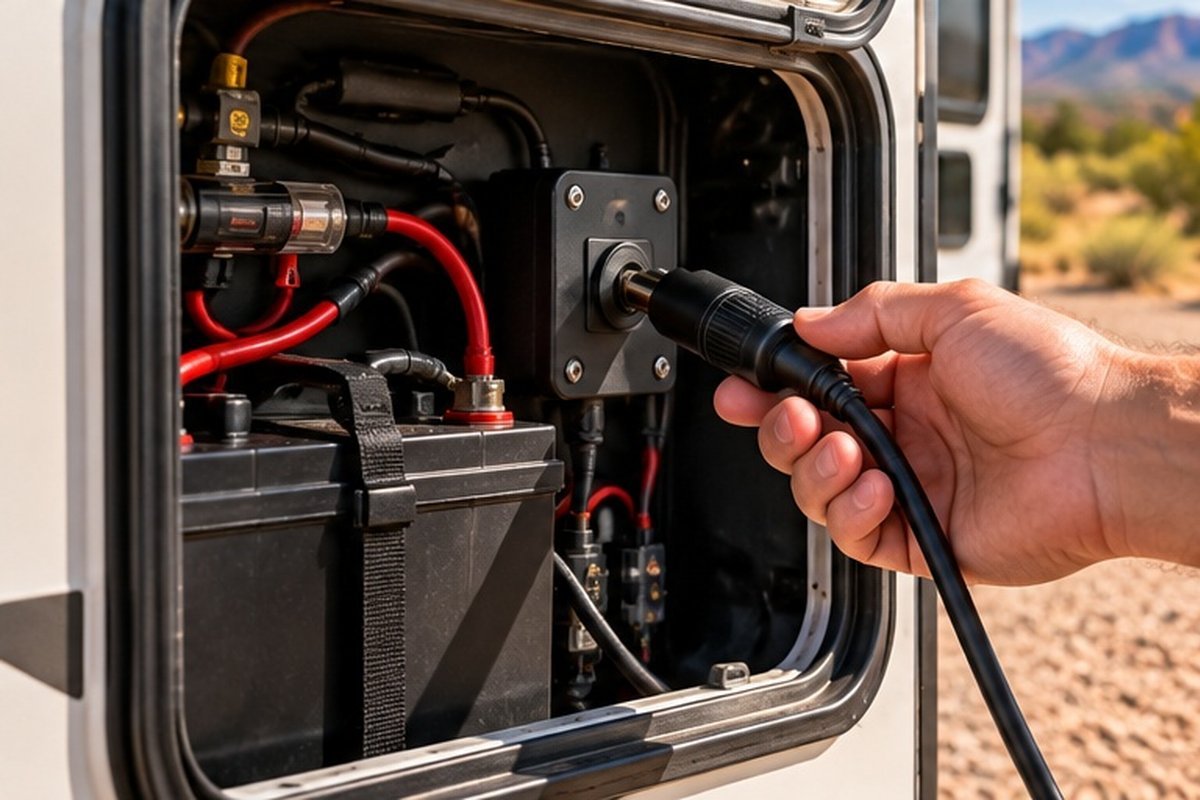
Power is the other half of the setup question. The Mini's 12 volt input makes it simple to run straight off an RV's house battery with the right adapter cable, no inverter needed. The Standard kit's AC power supply typically means running it through an inverter unless your RV already has a dedicated 120-volt circuit, which adds a real load most boondocking setups have to plan around.
Which Starlink Kit to Buy
Both Starlink for RV kits do the same job. The right one for your RV comes down to the power budget question above.
Starlink Mini Kit
Best for most RVs on battery and solar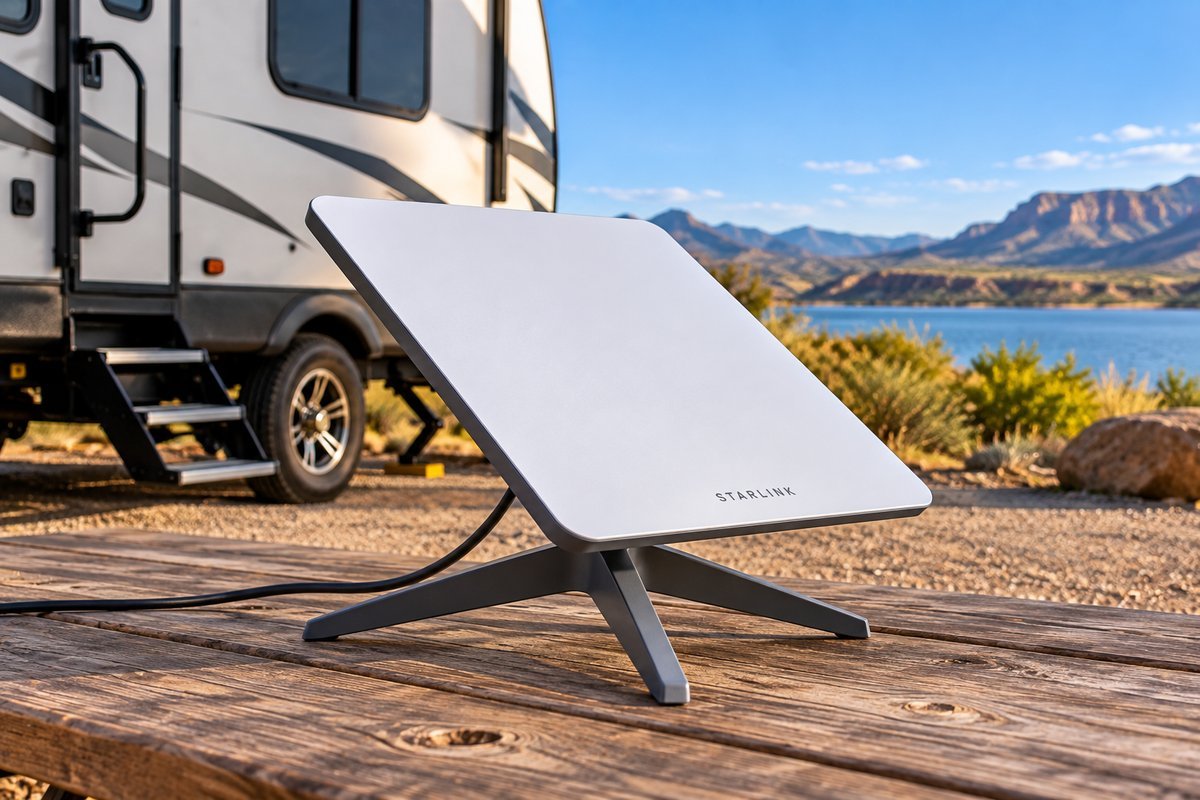
Starlink has cut the Mini's price five times since its June 2024 launch, and it's now priced lower than it's ever been, roughly a quarter of what it cost at launch. It's the cheapest way into satellite internet the company has offered, and most buying guides published before this month still quote an older, higher price.
The dish and WiFi router are one unit, small enough to fit in a backpack, and it draws about a third of what the Standard kit pulls. That lower draw is what makes it the practical pick for an RV running on battery and solar instead of shore power.
What You'll Love
- Built-in WiFi router, nothing extra to mount
- Runs on a straight 12 volt input, no inverter needed
- Light enough for one person to set up and break down
- The cheapest hardware cost Starlink has ever offered
Worth Considering
- 260 Mbps speed cap on Roam plans, even in good conditions
- Smaller dish picks up less signal through thin tree cover
- This listing on Amazon is a bundled 'service activation' version priced well above Starlink's direct price, worth comparing before buying
Starlink Standard Kit (Gen 3)
Best for thicker tree cover or higher sustained speeds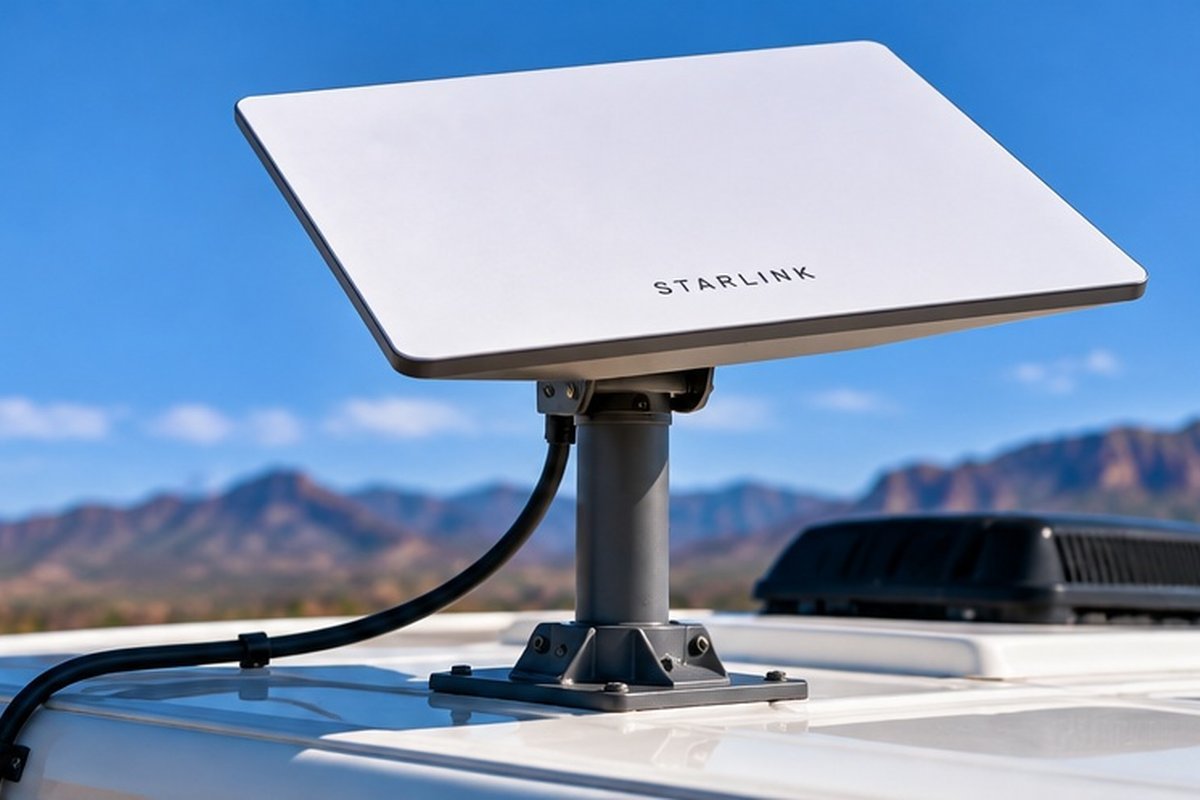
The Standard kit's price hasn't moved while the Mini's has dropped, and it now costs more than double what the Mini does. Its larger antenna pulls a cleaner signal through partial obstructions like thin tree cover, and on a fixed (non Roam) plan it can reach speeds up to 400 Mbps against the Mini's 260 Mbps Roam cap.
The tradeoff is power. At 75 to 100 watts, running it off battery and solar alone is a bigger ask than most boondocking setups can sustain for a full day, so most Standard owners run it while driving, on shore power, or paired with a bigger battery bank.
What You'll Love
- Cleaner signal through thin tree cover than the Mini
- Higher speed ceiling on a fixed plan
- Separate router means a bad router doesn't take down the dish
Worth Considering
- 75 to 100W draw is a real load for a battery and solar setup
- Nearly 3x the Mini's weight and footprint
- AC power supply typically needs an inverter unless the RV has a dedicated 120V circuit
If you buy the Mini and plan to run it straight off your RV's battery, a 12 volt adapter cable built for it is worth adding to the cart. It costs relatively little next to the dish itself and skips the need for an inverter.
Does Starlink Work While You're Driving?
Both kits support in-motion use on a Roam plan, up to 100 mph where local regulations allow it. The same physics that cause dropouts at a campsite apply on the road. Trees, overpasses, and canyon walls along the route cause brief interruptions, then the connection returns once the sky opens up again.
In practice, most RVers don't run Starlink while driving. The dish needs to stay mounted somewhere with a clear view of the sky, which usually means the roof, and keeping a video call or a large download running while towing is a smaller use case than having a reliable connection once you're parked. If you want in-motion use specifically, confirm your mount can handle highway speeds. A kickstand sitting loose on a picnic table is fine for a campsite and isn't a highway mount.
Frequently Asked Questions
Can I use my home Starlink plan in an RV?
Starlink's Residential plan is tied to a service address and isn't built for regular travel. Moving a Residential dish outside its registered area can trigger congestion-based deprioritization or extra fees. The Roam plan exists specifically to remove that restriction. If you already have Residential at a regular house and want to add RV use, Starlink treats it as a second line of service, not a swap.
Does Starlink drain an RV's battery fast?
The Mini's 25 to 40 watt draw works out to roughly 2 to 4 amp hours per hour of use on a 12-volt system, which a single 100 amp-hour lithium battery can support for a full day alongside normal RV use. The Standard kit's 75 to 100 watts is 3 to 4 times that draw, and adds up faster on a boondocking battery bank that's also running a fridge and lights.
Quick Answers
Is Starlink worth it for RVing?
For boondockers, remote workers, and anyone who regularly ends up without cell signal, yes. Campers who mostly stay at campgrounds with their own WiFi usually don't need it.
How much does Starlink cost for an RV per month?
The monthly plan cost depends on the data tier you pick, from an entry capped plan to an unlimited tier that costs roughly three times as much. Hardware is a separate one-time cost, with the Standard kit priced at more than double the Mini's current price.
Which Starlink kit is better for RV use, Mini or Standard?
The Mini, for most travel trailers and motorhomes running on battery and solar, because it draws about a third of the power. The Standard is worth the extra draw for anyone who regularly camps under thin tree cover.
Does Starlink work in heavy tree cover?
Not reliably. Dense tree cover can block the connection outright, and both kits need a mostly open view of the sky to hold a signal.
Can Starlink run off an RV battery?
Yes, for the Mini, which accepts a direct 12-volt input. The Standard kit's AC power supply usually needs an inverter unless the RV has a dedicated 120 volt circuit for it.
Where to Go Next
If a Starlink setup is going on a battery bank you haven't tested yet, RV Battery Testing walks through confirming it can deliver the capacity it claims before you add another always-on load.
For the rest of what draws power on a boondocking trip, the RV power hub rounds up the other guides in this cluster.