
A trailer tire going flat is the one failure you will not notice from the driver’s seat. That is the entire argument for a TPMS for travel trailers, short for tire pressure monitoring system, and it is also why the setup matters more than the brand. Most people who give up on these gave up in the first hour, for a reason that is fixable in five minutes.
Restful RV is a participant in the Amazon Services LLC Associates Program, an affiliate advertising program designed to provide a means for sites to earn advertising fees by advertising and linking to Amazon.com.
Table of Contents
Why a trailer needs one more than the truck does
Your tow vehicle tells you when a tire is soft. You feel it in the wheel, you hear it, and the truck has its own system. None of that is true of the trailer, which is the entire case for running a TPMS for travel trailers in the first place.
The same blindness applies to the trailer’s brakes. Nothing on the dash tells you a magnet has stopped pulling, which is why trailer brake controller repair so often starts at the connector rather than the box.
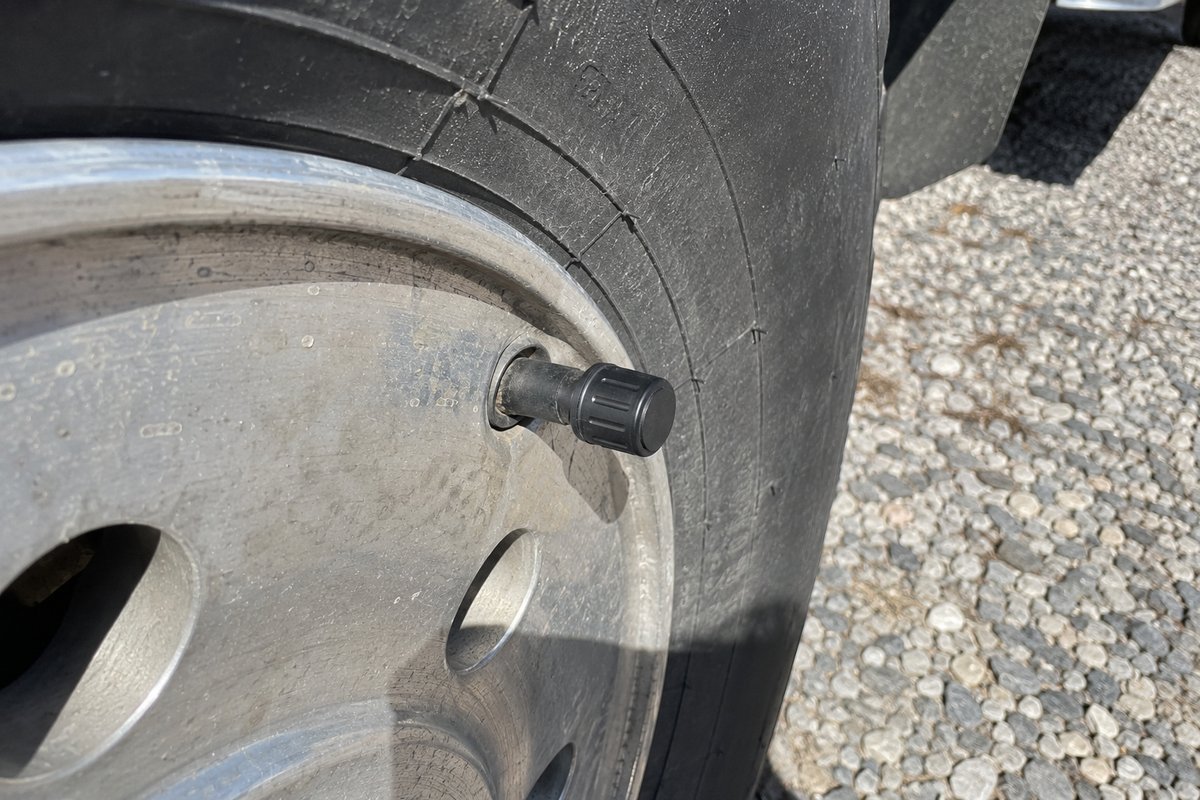
A trailer tire can lose most of its air, run hot, and shred without anything reaching you through the mirrors. What you usually notice is the bang. By then the flailing tread has taken the wheel well liner, often the underbelly, sometimes the plumbing behind it.
A monitor turns that into a beep twenty minutes earlier, which is the difference between a roadside change and a repair bill.
Step 1: Work out how many sensors you buy
Count the tires you actually want watched, then buy the kit that covers it. Sensors come in fours, sixes and tens, and buying short is the usual mistake.
- Single axle trailer: two tires. A four-sensor kit covers the trailer and leaves two spare, or covers the trailer plus the truck’s rear axle.
- Tandem axle: four tires. A four-sensor kit is exactly enough with nothing spare, so most people go to six.
- Triple axle or a fifth wheel: six tires, so a six-sensor kit at minimum.
- The spare: worth one sensor. A spare that is flat when you need it is a very bad afternoon, and you will never check it otherwise.
- The tow vehicle: optional. Its own system already covers it, though a single display for everything is genuinely nicer.
Both systems worth buying expand later, so if in doubt start with the trailer and add sensors when you want them.
Step 2: Cap sensors or flow-through
This is the only real hardware decision and it takes one look at your valve stems.
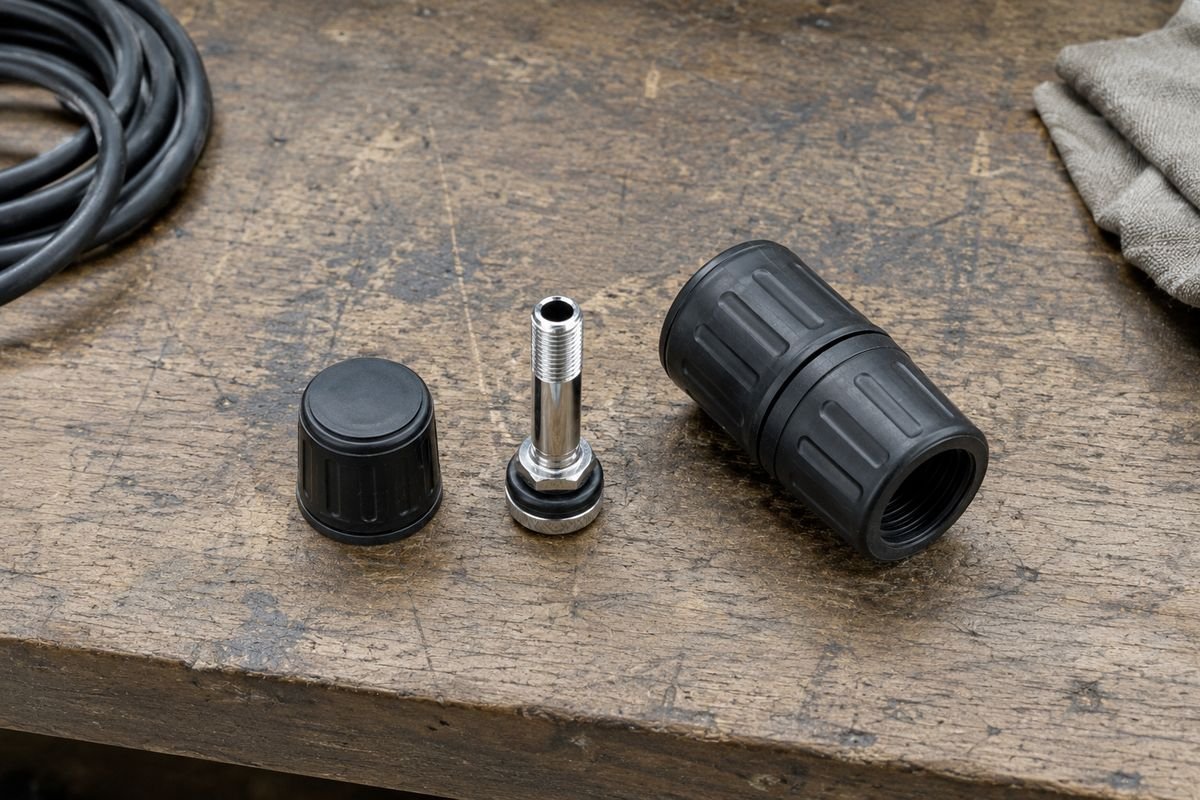
Cap sensors screw on where the dust cap was
They are lighter, around 16.8 grams on the TST system, and they fit anything. To add air you unscrew the sensor, inflate, screw it back on. That is the whole trade: simpler to fit, and a little more fuss every time you add air.
Flow-through sensors let you inflate without removing them
What they cost you is weight. At about 22 grams they are heavier than a cap sensor, and they only go on metal valve stems. On a rubber stem that weight works away at the joint every mile you drive, which is why the makers specify metal. A stem that lets go at speed is a blowout you built yourself.
So: look at your stems before you order. Rubber stems mean cap sensors, or a trip to a tire shop to have metal stems fitted first. If you have metal stems already, flow-through is the nicer daily experience.
Step 3: Fit the booster, do not skip it
The far axle of a trailer is a long way from a display stuck to your windshield, with a metal trailer frame in between. Signal drops are the most common complaint about every one of these systems and the fix is almost always the repeater that came in the box.
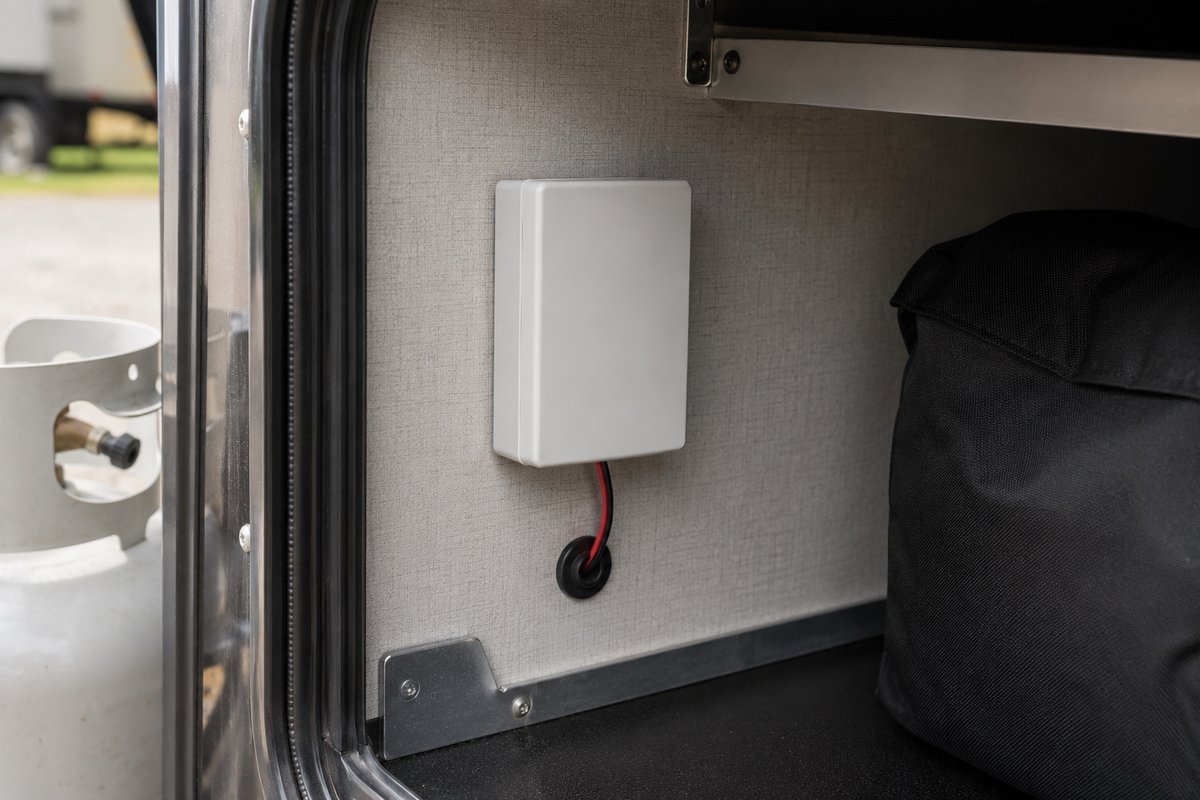
Both systems worth buying include one. Mount it roughly midway, the front of the trailer or the back of the tow vehicle, and give it power. If a sensor keeps dropping out, the repeater is the first thing to check, not the sensor.
Step 4: Change the alarm settings before you drive anywhere
This is the step that decides whether you keep the system or put it in a drawer.
These systems ship with factory defaults aimed at commercial trucks. The TST 507 arrives set to a low-pressure alarm of 100 psi, a high-pressure alarm of 175 psi and a high-temperature alarm of 158°F.
A travel trailer on ST tires runs somewhere around 50 to 65 psi cold. Fit the sensors, drive off, and every one of them is below the low-pressure alarm from the end of your driveway. The display screams, you conclude the kit is faulty, and it goes in the drawer. It is not faulty. Nobody changed the numbers.
Find your cold pressure first
Two numbers matter and they are not the same. The sidewall gives the maximum cold pressure the tire is rated for. The placard sticker on the trailer, usually near the door or on the A-frame, gives the pressure the manufacturer wants for that trailer at its rated weight.
For most travel trailers those numbers are the same, because trailer tires are normally run at their maximum cold rating. If yours differ, follow the placard. Set your tires to that, cold, before you set any alarm.
Worth saying plainly: a monitor tells you a tire is losing air, not that a tire is too old to trust. Those are different failures, and the second one is the more common way trailer tires end a trip. Travel trailer tires age out before they wear out covers the date code, what the makers actually publish about replacement age, and why tread depth is the wrong test.
Then set the alarms around it
Manufacturers do not publish recommended settings for trailers, which is exactly why the RV forums are full of people asking what to use. A workable starting point, and one worth confirming against your own manual:
- Low pressure: roughly 10 to 15 percent below your cold pressure. On 65 psi cold that is about 55 to 58 psi. Low enough not to nuisance-trip, high enough to catch a leak long before the tire is in trouble.
- High pressure: roughly 20 to 25 percent above cold. Pressure rises as the tire heats on a long run. That is normal, not a fault, and setting this too tight is the second reason people switch these off.
- High temperature: 158°F is the common default and a reasonable place to leave it. Heat is the thing that actually destroys a trailer tire, and a tire climbing while its neighbors hold steady is the warning worth having.
Write your numbers on a bit of tape inside a cabinet door. You will change tires one day and want to remember what you set and why.
Step 5: Fitting them takes twenty minutes
- Set every tire to its cold pressure first, in the morning, before you drive. Pressure set on warm tires is wrong.
- Screw the sensors on hand tight. No tools, you will crack the seal.
- Fit the anti-theft collars if your kit came with them. Cap sensors unscrew as easily for a stranger as for you.
- Learn each sensor to its position on the display, left front, right rear and so on, or an alarm tells you something is wrong without telling you where.
- Mount the repeater and give it power.
- Drive ten minutes and watch every sensor report. A sensor that never appears is a learning problem, not a faulty sensor, nine times out of ten.
What you will see on the road, and what is normal
Pressures climb as the tires warm. Ten percent over a couple of hours on a hot day is ordinary and is not a reason to let air out, a hot tire bled down to its cold number will be badly underinflated when it cools.
The reading worth acting on is one tire behaving differently from the others. Four tires all climbing together is weather and road speed. One climbing alone, or one drifting down over an hour, is the one to pull over for.
Do check it at fuel stops rather than staring at it. The point of the thing is that it watches while you do not.
What to buy
Three systems here, because these are the ones whose specifications the manufacturer actually publishes. All three cover a trailer properly, though only two of them include the repeater.
The three worth your money
TST 507 Series
Fullest published specReads 1 to 218 psi and operates from −40°F to 176°F, which is the widest published range in this category. The sensors take a CR2032 that you change yourself, so a dead sensor is a coin cell rather than a new sensor.
It comes in cap or flow-through versions and the repeater is in the box rather than sold separately. Buy this one if you want the fullest published specification and the choice of sensor type.
One thing to do before you tow anywhere: the alarm defaults are truck numbers, and they are wrong for a trailer.
What You’ll Love
- The fullest published specification of anything in this category
- Choice of cap sensors or flow-through
- Batteries are a CR2032 coin cell you can change yourself
- Repeater comes in the box instead of being an extra purchase
Worth Considering
- Flow-through sensors need metal valve stems, so rubber stems mean a trip to the tire shop
- Flow-through sensors weigh 22 g against 16.8 g for caps
- The alarm defaults are truck pressures and have to be changed before the first tow
- The same listing sells four, six and eight sensor kits, and the four is not enough for a tandem axle
TireMinder i10
Most tires, best documented accuracyReads 0 to 199 psi and is the only one of the three that publishes an accuracy figure, plus or minus 1 psi. It checks every six seconds and monitors up to 40 tires, which is nearly double the TireMinder Smart and well beyond anything a trailer and truck will ever need.
The kit is six transmitters, the monitor and the signal booster, on a 3.15 inch color screen with a three year warranty.
There is no phone app, and that is the point. This is a screen and a buzzer that work whether or not your phone is awake, which is the arrangement this article argues for. If you specifically want readings on a phone, TireMinder’s Smart system does that and still alarms on its own, but it reads to 232 psi against this one’s 199 and covers 22 tires against 40.
What You’ll Love
- The only one here publishing an accuracy figure, plus or minus 1 psi
- Monitors up to 40 tires, so a truck, trailer and spares are never a constraint
- Its own screen and buzzer, with nothing depending on a phone staying awake
- Three year warranty, and the booster is in the box
Worth Considering
- No phone app at all, so if you wanted readings on a phone this is the wrong one
- The 199 psi ceiling is lower than the TST at 218
- Forty tires is far more capacity than a travel trailer will use
- Sensor batteries are CR1632 only, with no second option
EEZTire TPMS6ATC
Most expandableReads 0 to 188 psi with sensors rated from −40°F to 176°F, on a replaceable CR1632. The kit is the monitor plus six anti-theft sensors, and it expands to 26, which is more than either of the other two.
The sensors come in housings meant to make them harder to unscrew and walk off with, which matters more than it sounds on a trailer left in a storage lot.
Buy this one if you are monitoring a truck and trailer together and expect to add sensors later. Two things to know before you do: the booster is not in the box, and EEZ’s own paperwork does not agree with itself about the warranty.
What You’ll Love
- Expands to 26 sensors, the most of the three
- Sensors rated to the same −40°F to 176°F as the TST
- Anti-theft sensor housings rather than plain caps
- Batteries are a replaceable CR1632 rather than a sealed sensor
Worth Considering
- The 188 psi ceiling is lower than the TST at 218 and the TireMinder at 232
- The signal booster is an accessory, where both the others include one
- EEZ’s own documents disagree on the warranty, 36 months on the spec sheet against one year on their store page
- Model naming across their range is inconsistent, so check the model on the listing matches the spec sheet you read
What to add
- One extra sensor for the spare. Both systems expand, and a flat spare is the failure nobody plans for.
- Metal valve stems, if you want flow-through sensors and have rubber stems now. Cheaper to have done at the same time as a tire change.
- A decent 12V compressor. A monitor tells you a tire is low; something has to put the air back.
What not to bother with
Four-sensor kits for a tandem-axle trailer: exactly enough and no margin. One sensor fails or gets stolen and you are down to three until a replacement arrives. Six costs a little more and ends the problem.
App-only systems with no display: cheaper, and they look modern. The alert has to reach you when your phone is locked in a cradle running navigation. A system with its own screen and its own buzzer is doing the job you bought it for.
A TPMS for travel trailer wheels earns its price on the first slow leak it catches, because that is the failure nobody spots from the driver seat until the tire has already been destroyed.
Common Questions
What is TPMS on an RV?
A tire pressure monitoring system. A sensor sits on each valve stem, reads pressure and temperature, and sends both to a small display you keep in the tow vehicle. It alarms on low pressure, high pressure, a fast leak and high temperature.
On a trailer it earns its keep more than on the truck, for the reason the top of this article gives: nobody is sitting over those axles. A trailer tire can go down and then apart without anything reaching you through the seat or the steering wheel.
What is the recommended tire pressure for a travel trailer?
Whatever your own trailer’s placard says, measured cold. That is the sticker on the trailer itself, not the number on the tow vehicle’s door jamb and not a figure carried over from a car. If the placard is missing or has faded off, the tire’s sidewall states its own maximum cold pressure, NHTSA’s tire safety guidance covers how to read that sidewall data, and a tire dealer can confirm the right figure for the weight you actually carry.
This site does not print a psi number here, because there is not one that applies to every trailer. Anybody who gives you a single figure without asking what you tow is guessing.
Can you install a TPMS yourself?
With cap sensors, yes, and it is a twenty minute job. You unscrew the valve cap, screw the sensor on in its place, and program each one to a tire position on the display. No tools, nothing to wire into the trailer.
Flow-through sensors are the exception. They need metal valve stems, so if yours are rubber you are waiting on a tire shop before you can fit them, and that is worth doing at the same time as a tire change rather than as its own trip. The repeater is the other thing to plan for, since it needs a 12 volt supply.
The short version
Setting up a TPMS for travel trailers comes down to six steps:
- Count your tires, add the spare, buy the next kit size up.
- Rubber valve stems mean cap sensors. Metal stems mean you can have flow-through.
- Fit the repeater. It is not optional on a trailer.
- Set cold pressures in the morning to the placard number.
- Change the alarm thresholds before you drive, the factory settings are for trucks.
- Expect pressures to rise on a hot run. Worry about one tire behaving differently, not all four rising together.
Fitted properly and then left alone, a TPMS for travel trailer use does the one job no mirror can do at seventy miles an hour.
Related guides
- RV Storage & Security: The Complete Guide. What goes wrong while a trailer sits, including what standing still does to tires.
- 5 Best GPS Trackers for Travel Trailers. The other thing worth knowing about a trailer you cannot see.
- 5 Best Battery Maintainers for RVs in Winter Storage. The failure most likely to greet you in spring.
How To: Setup Summary
How to set up a TPMS on a travel trailer.
Step 1: Work out how many sensors you buy
Count the tires you actually want watched, then buy the kit that covers it. Sensors come in fours, sixes and tens, and buying short is the usual mistake.
Step 2: Cap sensors or flow-through
This is the only real hardware decision and it takes one look at your valve stems.
Step 3: Fit the booster, do not skip it
The far axle of a trailer is a long way from a display stuck to your windshield, with a metal trailer frame in between. Signal drops are the most common complaint about every one of these systems and the fix is almost always the repeater that came in the box.
Step 4: Change the alarm settings before you drive anywhere
This is the step that decides whether you keep the system or put it in a drawer.
Step 5: Fitting them takes twenty minutes
Pressures climb as the tires warm. Ten percent over a couple of hours on a hot day is ordinary and is not a reason to let air out, a hot tire bled down to its cold number will be badly underinflated when it cools.